
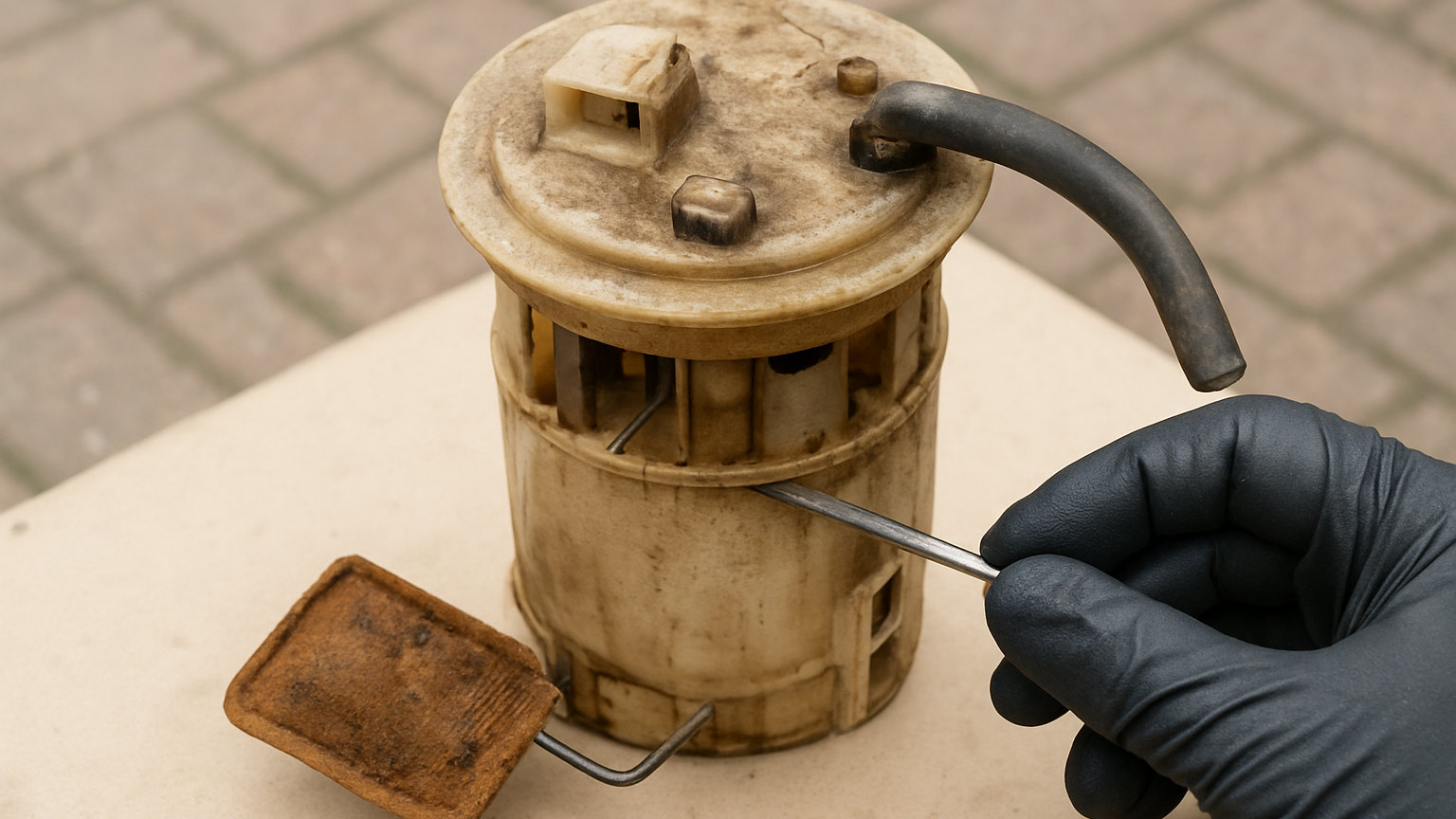
A fuel pump that is on its way out gives a reasonably generous period of warning, and the warnings are consistent because they all appear at the same moment: when the engine demands more fuel than the pump can now supply. Recognising that pattern early turns a roadside breakdown into a planned repair, and the difference between those two outcomes is considerable.
What are the early signs?
Hesitation or surging at sustained high speed, particularly on motorways, is usually the first. The car may momentarily lose power and then pick up again, feeling as though someone briefly lifted off the throttle. Difficulty climbing hills at speed follows, and so does a longer than usual crank before starting, especially after the car has stood. A whining or humming from the rear of the car that is louder than it used to be is another common early indicator.
Why does it show up under load first?
Because a pump delivering reduced flow can still meet the modest demand of gentle driving. It is only when the engine asks for its maximum, on a hill or at high speed, that the supply falls short and pressure drops. This is the same reason the fault often appears intermittently at first, and why a car can pass a workshop test at idle while genuinely misbehaving on the road. Fuel pressure needs measuring under load rather than at rest.
How do you tell a pump from a blocked filter?
Honestly, not easily from the driving seat, because the symptoms overlap almost completely. The practical approach is to look at the service history: if the fuel filter has never been changed or is well overdue, replace it first, since it is far cheaper and a genuine service item. If a new filter makes no difference, the pump becomes the prime suspect. A garage measuring fuel pressure at the rail will distinguish the two properly.
Does running the tank low really damage the pump?
It contributes. The pump sits inside the tank and is cooled and lubricated by the fuel surrounding it, so running consistently on the last quarter leaves it working harder and hotter. It also increases the chance of drawing in sediment from the bottom of the tank, which blocks the pump strainer. Keeping the tank above a quarter is a small habit that measurably extends pump life, particularly on older cars.
What about diesel systems?
Diesels typically have a lift pump in the tank and a high pressure pump on the engine, and the high pressure pump is a considerably more expensive component. Because diesel lubricates the pump, fuel contamination or running the tank completely dry causes real damage. A failing high pressure pump can also shed metal particles into the fuel system, which contaminates the injectors and turns one repair into a much larger one. Diesel fuel system faults are worth diagnosing promptly for that reason.
Are there cheaper causes worth ruling out?
Yes. The fuel pump relay and its fuse can both fail and produce intermittent supply, and both are far cheaper than a pump. Corroded wiring at the tank connector is another common cause of intermittent operation. A blocked fuel filter, as above, mimics the symptoms exactly. Any competent diagnosis should check pressure and electrical supply before condemning the pump itself, since dropping a tank is a significant labour cost to incur unnecessarily.
How urgent is it?
Reasonably. A pump that is surging on the motorway will eventually stop entirely, and it will do so without much further notice, usually at speed on a fast road. That is a genuinely hazardous way to discover the answer. If the car is showing these symptoms, arrange the diagnosis rather than waiting to see how long it lasts, and avoid long or remote journeys until it has been sorted out. Keeping the tank reasonably full in the meantime will not fix anything, but it does reduce the strain on a pump that is already struggling.


