
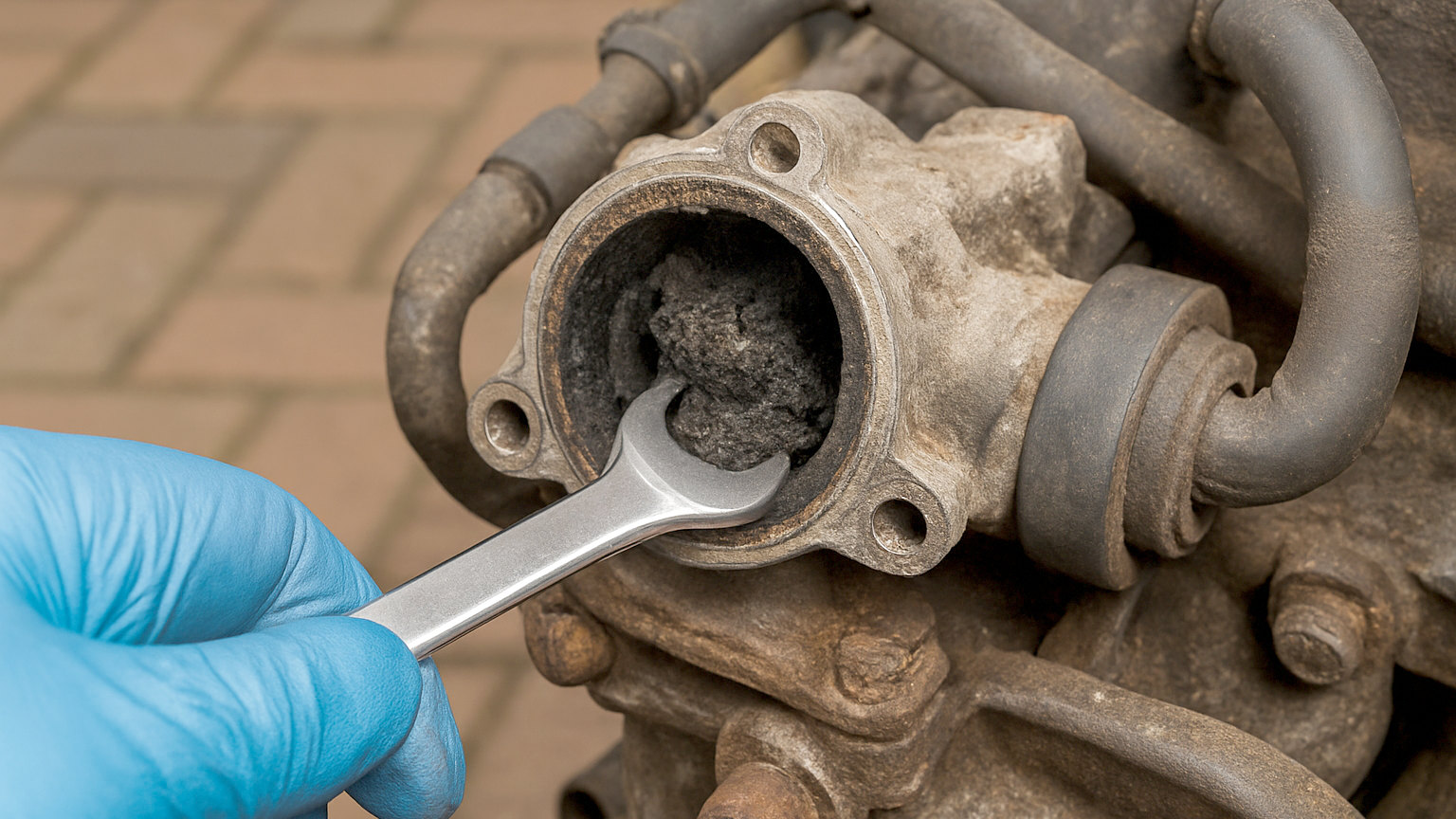
The exhaust gas recirculation valve is one of the least loved components on a modern engine, and it is responsible for a great many complaints about rough running and lost power. Its job is genuinely useful, but it operates in a filthy environment and it clogs, and when it does the engine is left trying to burn fuel in air that has already been used once.
What is the valve actually for?
Nitrogen oxides form when combustion temperatures are very high. Feeding a controlled amount of inert exhaust gas back into the intake lowers the peak temperature and reduces those emissions substantially. It is opened under light load, where the engine has air to spare, and closed under acceleration when full power is needed. Working correctly, it is invisible to the driver and does no harm to performance at all.
Why does it clog?
Because it is deliberately routed into the path of sooty exhaust gas, and that soot mixes with oil vapour from the crankcase breather to form a thick tarry deposit. Diesels produce far more soot than petrol engines, which is why the problem is so strongly associated with them. Short journeys make it worse, since the valve never gets hot enough for long enough to burn deposits away, and a car that never leaves town will foul a valve in a fraction of the mileage.
What are the symptoms of a sticking valve?
A valve stuck open lets exhaust gas in when the engine needs fresh air, which produces a rough or lumpy idle, hesitation, black smoke, poor economy and a clear lack of power. It can also cause stalling at junctions. A valve stuck closed produces fewer driveability symptoms but usually triggers a fault code and can lead to higher combustion temperatures and pinking. Either way the engine management light generally appears with a code naming the EGR circuit or flow.
Can it be cleaned rather than replaced?
Often, and it is usually worth trying first. Removing the valve and cleaning the deposits with a suitable solvent restores function in many cases, and on some engines the inlet manifold is also heavily coated and benefits from the same attention. Cleaning is labour rather than parts, so it is cheaper, but on some designs the valve is electronically controlled with an integrated motor and position sensor that can fail independently of the blockage, in which case replacement is the only route.
What about the EGR cooler?
Many diesels route the recirculated gas through a small coolant-fed cooler before it reaches the intake. These crack internally with age and let coolant into the exhaust or intake, which produces white smoke, unexplained coolant loss and sometimes symptoms easily mistaken for a head gasket failure. If a car is losing coolant with no external leak and has a heavily used EGR system, the cooler is worth investigating before anything more drastic is assumed.
Is blanking or removing it an option?
No. Disabling emissions equipment makes a vehicle non-compliant, it is checked at the MOT on modern cars, and it can invalidate insurance. It also raises combustion temperatures, which is unkind to valves and pistons over time. The legitimate approaches are cleaning, replacement, and changing the driving pattern that caused the fouling in the first place.
How do you stop it happening again?
Regular longer journeys at reasonable load do most of the work, since they get the whole exhaust system hot enough to keep deposits down. Keeping to the correct oil specification and change interval reduces the oil vapour that binds the soot into a paste. And on a car that does almost exclusively short urban trips, it is worth accepting that the EGR valve, the particulate filter and the turbo vanes will all need periodic attention, because the driving pattern rather than the components is the underlying cause. Budgeting for that is more realistic than hoping the next clean will be the last one.


