
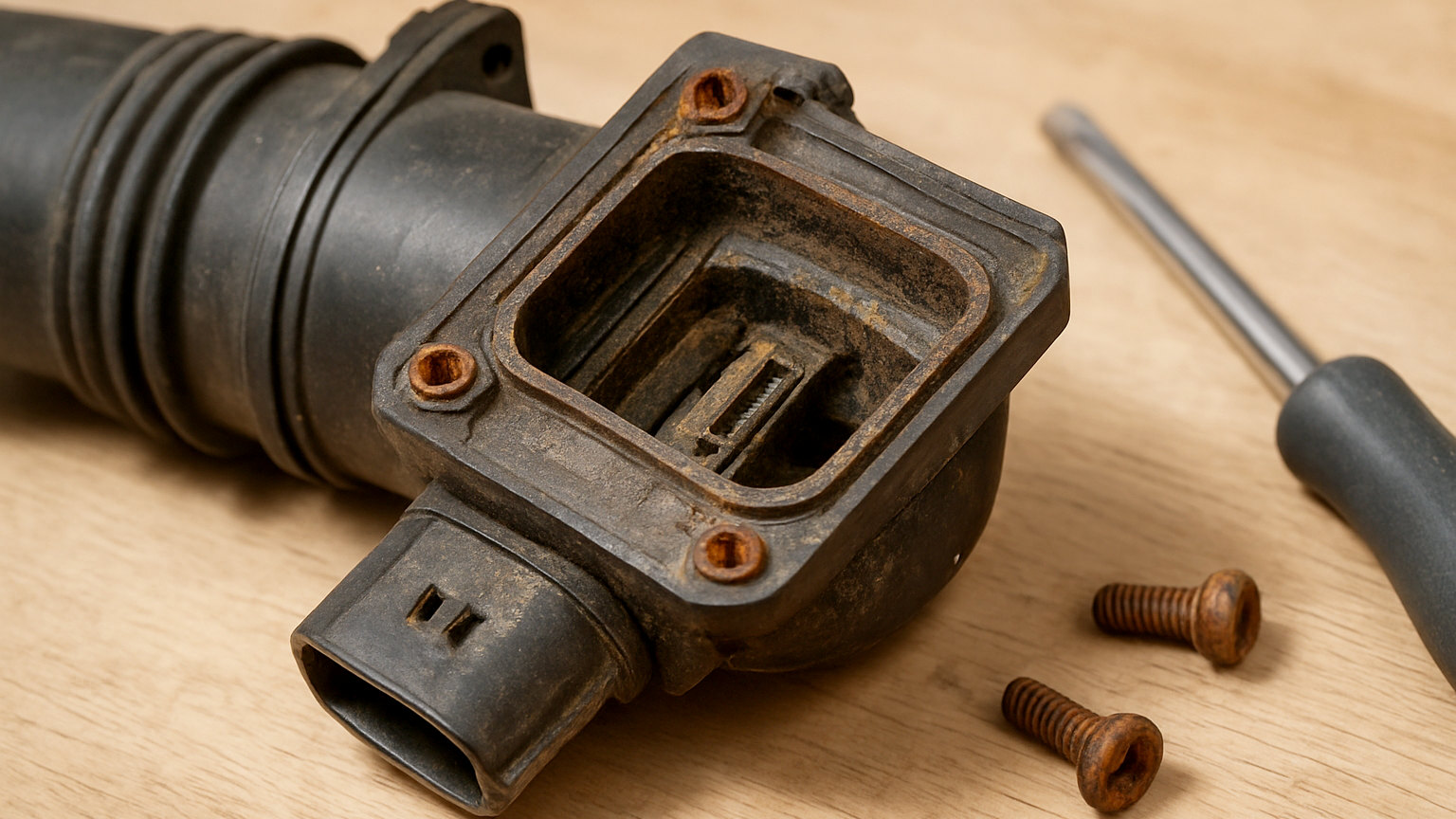
The mass airflow sensor sits between the air filter and the throttle, and it measures how much air is entering the engine. That figure is the foundation of almost every calculation the engine management makes, most importantly how much fuel to inject. When the sensor reads inaccurately, the fuelling is wrong across the whole range, and the symptoms that follow are varied enough that the sensor itself is often the last thing suspected.
How does the sensor work?
Most use a heated wire or film held at a constant temperature. Air passing over it removes heat, and the current required to maintain that temperature is proportional to the mass of air flowing. It is an elegant method and it depends entirely on the element being clean, because any coating acts as insulation and slows the response. Dust that gets past a poorly sealed filter, and oil from over-oiled performance filters, are the usual contaminants.
What are the symptoms of a dirty sensor?
Hesitation when accelerating, a flat spot at particular throttle openings, rough idling or stalling shortly after starting, noticeably worse fuel economy, and a general sense that the car is down on power without any single dramatic fault. Some cars enter limp mode. The engine management light frequently appears with codes relating to airflow range or performance, or with lean or rich fuel trim codes that are the consequence of the bad reading rather than a separate fault.
Why does a slightly wrong reading matter so much?
Because the fuelling follows it exactly. A sensor under-reporting airflow causes the engine to run lean, which produces hesitation, misfires under load and, over time, higher combustion temperatures that are unkind to valves and catalytic converters. A sensor over-reporting causes rich running, which wastes fuel, fouls plugs, produces black smoke and coats the catalytic converter. Neither condition is dramatic on day one, and both cause expensive secondary damage if left long enough.
Can you clean it yourself?
Usually, and it is one of the more worthwhile driveway jobs. Disconnect the battery, unplug the sensor, remove it carefully from the intake, and spray the element generously with a dedicated mass airflow sensor cleaner. Never touch the wire or film with anything, never use brake cleaner or carburettor cleaner, and let it dry completely before refitting. The whole job takes fifteen minutes on most cars and the cleaner costs very little, which makes it a sensible first step before buying a replacement.
How do you know when it needs replacing instead?
When cleaning produces no improvement, or when the improvement lasts only days. A garage can compare the sensor live reading against the expected airflow for the engine size and speed, which reveals a sensor that is reading consistently low even when clean. Genuine or reputable brand sensors are strongly preferable here, since cheap aftermarket units have a poor reputation for accuracy and frequently produce the same symptoms straight out of the box.
What causes them to get dirty in the first place?
An air filter that has been left too long, a filter housing that is not sealing properly, or an aftermarket oiled cotton filter that has been over-oiled after cleaning. Oil mist from the crankcase breather can also reach the sensor on engines where the breather feeds in nearby, which is a sign of worn piston rings or a blocked breather system. If a sensor keeps getting contaminated, the cause is upstream and needs finding.
Is it worth doing before other work?
Almost always, because it is cheap, quick and it eliminates a variable that affects every other reading. A garage diagnosing hesitation or poor economy on a car with a contaminated sensor is working with bad information, so cleaning it first makes everything that follows more reliable. It is one of the few maintenance jobs where the effort and cost are trivial and the potential improvement is genuinely noticeable, and it is worth doing at every second air filter change as a matter of routine.


