
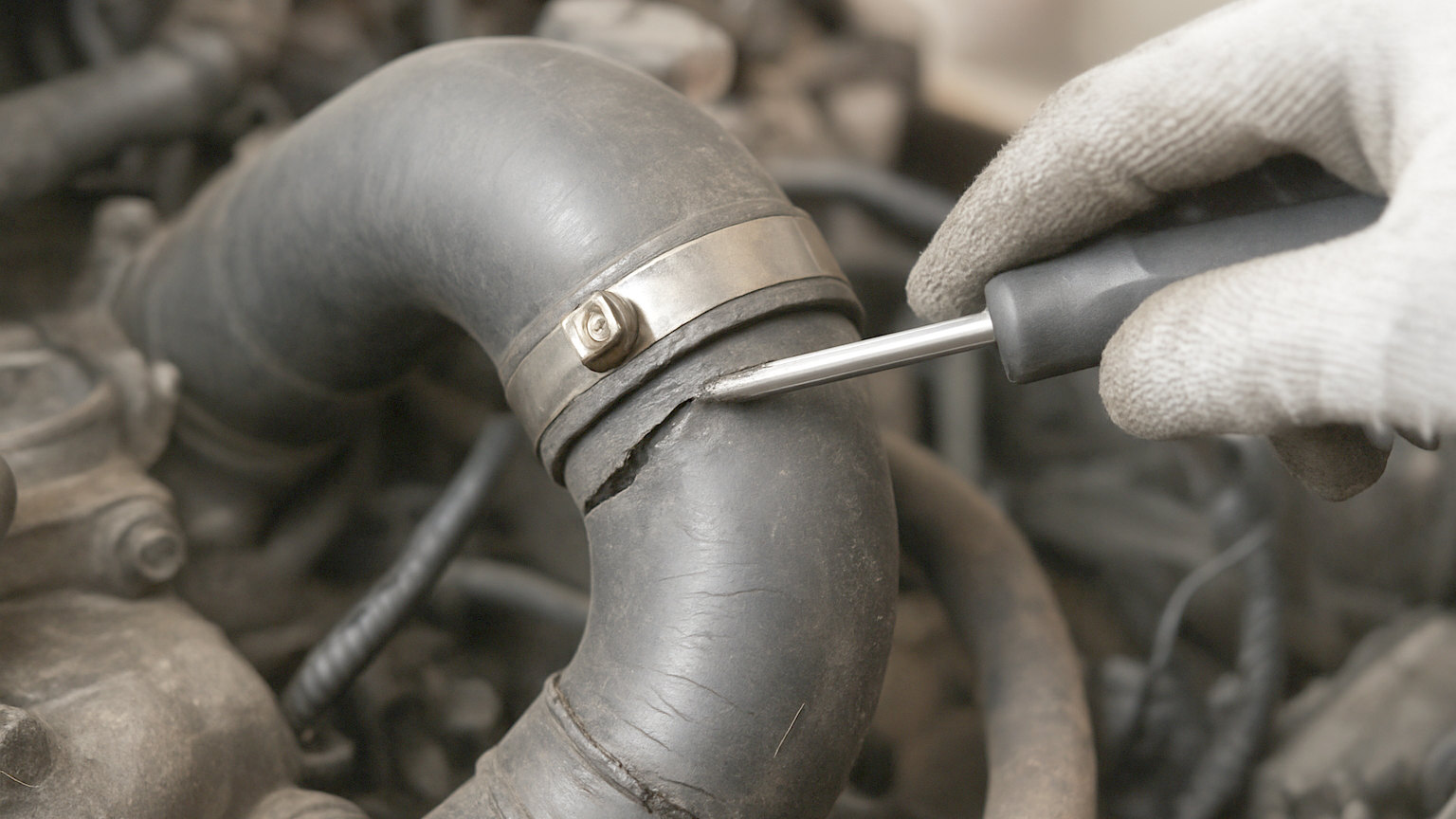
A great many cars that seem perfectly healthy in ordinary driving reveal themselves on a long hill, and there is a straightforward reason for that. Cruising on level ground uses a surprisingly small proportion of an engine output, so a restriction that removes a third of the available power goes unnoticed for months. A sustained climb asks for everything the engine has, and anything holding it back becomes obvious immediately.
Why does load matter more than speed?
An engine working hard needs a great deal more air and fuel per second than one being asked to maintain sixty on the flat. Any restriction in either supply behaves like a bottleneck that only matters once flow rate rises past a certain point. This is why a partially blocked fuel filter causes no symptoms in town, then makes the car surge and hesitate two thirds of the way up a motorway incline. The same applies to towing, a full car, and hot weather.
What are the fuel side causes?
A clogged fuel filter is top of the list and is a service item people forget entirely. A weakening fuel pump can maintain pressure at low demand and fall away under sustained high flow, producing exactly this pattern before it fails completely. Injectors that have worn or become partially blocked deliver less than the engine management expects. On diesels, air drawn into the fuel system through a perished pipe or a leaking filter seal gives the same result and often gets worse the longer the climb continues.
What are the air side causes?
A blocked air filter genuinely does restrict a hard working engine, even though it makes very little difference at light load. On turbocharged cars, a split intercooler hose or a loose clamp releases boost exactly when boost is needed most, which produces a car that feels normal around town and gutless on a hill. Variable geometry turbo vanes that have become sticky with soot fail to build pressure under load, and this is a very common diesel complaint.
What about the exhaust side?
An engine has to push exhaust gas out as fast as it draws air in, so a restriction there causes identical symptoms. A partially blocked catalytic converter or a diesel particulate filter approaching its capacity limits how much the engine can breathe out, and the effect scales with load. The classic description is a car that accelerates reasonably from rest and then hits an invisible wall, sometimes accompanied by a smell of sulphur or unusual heat from underneath.
Could it be the clutch rather than the engine?
It could, and this is worth ruling in or out early because it changes everything. A slipping clutch produces engine revs that rise without a matching increase in speed, and hills are where it shows first. The test is to select a high gear at low speed and accelerate firmly: if the revs climb faster than the car does, the clutch is slipping rather than the engine failing. On an automatic, a similar sensation usually means transmission slip and needs prompt attention.
What should you check first?
Have the fault codes read even if there is no warning light, since underboost and lean running codes are often stored without illuminating anything. Check the air filter and the intercooler pipework visually, and look at the service history for the fuel filter. Then note precisely where in the rev range and how far into the climb the problem appears, because a car that dies after thirty seconds of full load points at fuel supply, while one that is flat from the outset points at air or exhaust restriction.
It is also worth taking the same hill twice, once with a light throttle in a low gear and once at full load, since a fault that only appears in one of those two conditions has already told a mechanic a great deal about where to look.


