
Hesitation is that brief moment where you press the accelerator and the car does not immediately respond, stumbling or bogging down before catching up. It is most obvious pulling away from a junction or overtaking, and it happens because the transition from light throttle to heavy throttle is the hardest moment for an engine management system to get right. Any weakness in fuelling or ignition tends to show itself precisely there.
Why is acceleration the difficult moment?
When the throttle opens suddenly, a large volume of air rushes into the manifold and the fuelling has to increase instantly to match it. The system relies on airflow and throttle position sensors to anticipate that demand, and the ignition has to fire a mixture that is momentarily much denser than it was a fraction of a second earlier. A worn spark plug that copes perfectly at idle may fail to jump the gap under that increased cylinder pressure.
What are the ignition causes?
Worn spark plugs are the most common and the cheapest to address, and they are frequently far past their replacement interval on cars that have only had oil changes. Failing coil packs typically cause hesitation under load before they cause a misfire at idle, and a coil that is breaking down under high cylinder pressure produces exactly this symptom. On older cars, perished HT leads and a damp distributor cap do the same. A flashing engine management light during hesitation confirms a misfire is occurring.
What are the fuelling causes?
A partially blocked fuel filter or a weakening pump cannot supply the sudden increase in flow that hard acceleration demands, so pressure momentarily falls and the mixture goes lean. Dirty injectors deliver a poor spray pattern that atomises badly under load. A failing fuel pressure regulator produces the same. These faults share a signature: the car is fine at steady throttle and hesitates whenever demand rises sharply, and they generally get worse over months rather than appearing overnight.
How does a dirty airflow sensor cause it?
The mass airflow sensor measures the air entering the engine, and its sensing element is a fine wire or film that becomes coated with dust and oil over time, particularly on cars with oiled performance air filters. A contaminated sensor reads slowly and under-reports sudden increases in airflow, so the fuelling lags behind the throttle. Symptoms include hesitation, a flat spot, poor economy and sometimes stalling. Cleaning it with a proper sensor cleaner is inexpensive, though the element is delicate and must not be touched.
Could it be an air leak?
Yes. Air entering the inlet after the airflow sensor is not measured, so the engine runs leaner than the management believes. At idle this causes a rough or hunting idle, and on light throttle it causes hesitation. Look and listen for a hiss around the intake pipework and breather hoses, particularly at bends where rubber cracks with age. A smoke test at a garage finds the small leaks that cannot be heard over a running engine.
What about throttle and pedal sensors?
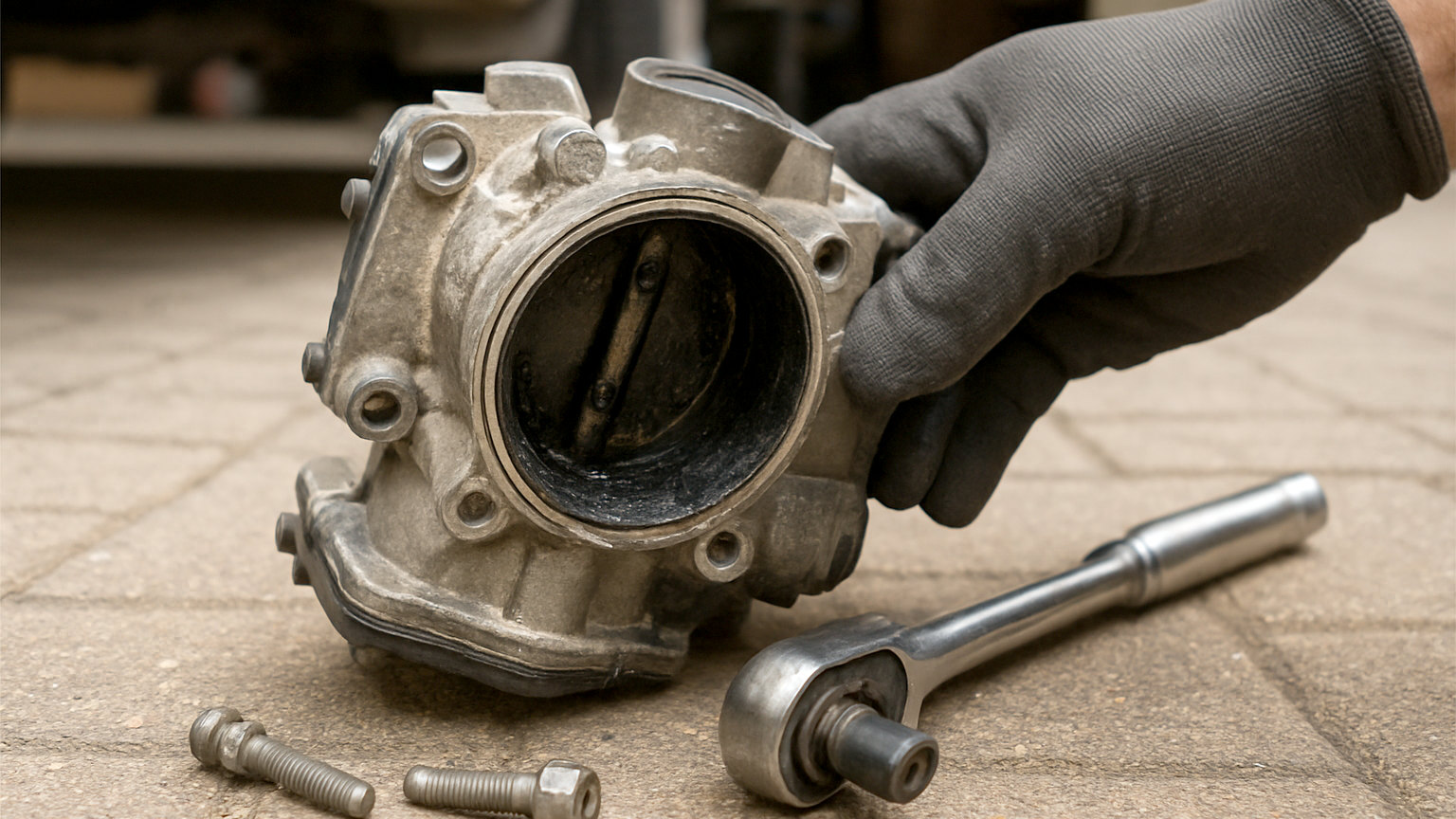
Modern cars have no cable between the pedal and the throttle, so both the pedal and the throttle body carry position sensors and the management compares them. A dirty throttle body with carbon around the plate causes uneven response at small openings, and a worn sensor produces a hesitation or a surge. Cleaning a throttle body is a routine job on many engines, though some require a relearn procedure afterwards, so it is worth checking before doing it.
Where should you begin?
Check when the spark plugs and fuel filter were last replaced, since both are service items and both cause this symptom when overdue. Have the fault codes read even if no light is showing, because misfire counters and fuel trim values are recorded regardless. Those two steps identify the cause in most cases without spending anything on parts that may not be at fault.


