
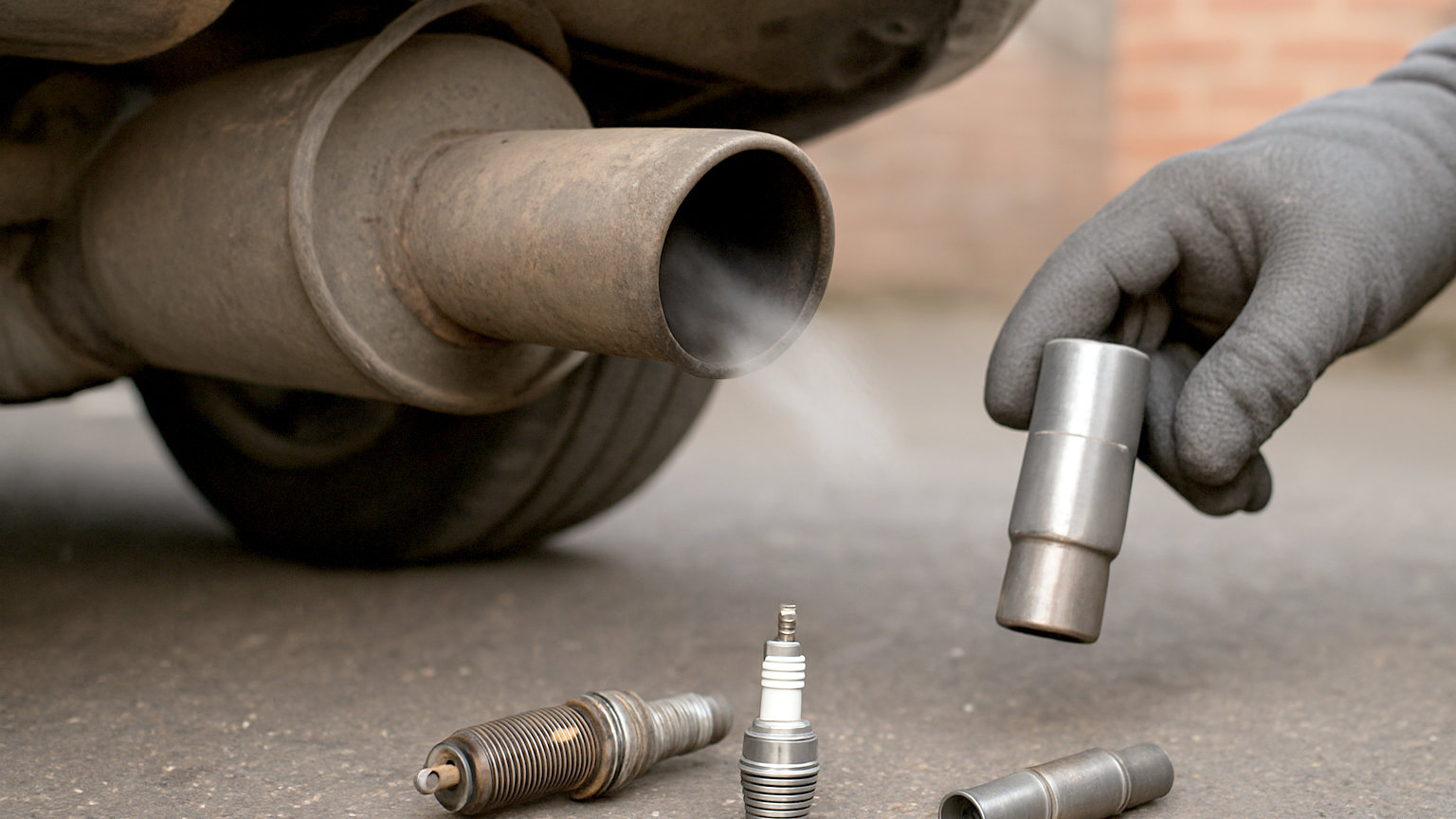
White smoke is the exhaust colour most likely to cause unnecessary alarm, because the internet answer is always a head gasket and the reality is that most white vapour is entirely harmless. There are three distinct explanations, they look broadly similar at a glance, and separating them takes a few minutes and no equipment. Doing that before panicking is worth the effort.
When is white vapour completely normal?
Burning any hydrocarbon fuel produces water vapour, and on a cold morning that condenses in the cool exhaust system into a visible white cloud. It is thin, wispy, appears at startup, is worse in cold damp weather, and clears entirely within a minute or two as the exhaust warms and dries. Every car does this, and on a frosty morning a completely dry exhaust would be more surprising than a steaming one.
What does coolant smoke look like instead?
Denser and whiter, persistent after fifteen minutes of running, worse under load rather than better, and carrying a distinctly sweet syrupy smell from the glycol in the antifreeze. It does not clear as the engine warms because the coolant supply does not run out. If your smoke is still there after a proper drive, that alone separates it from condensation more reliably than any other observation.
What else points at a head gasket?
Rarely one symptom alone. Look for a coolant level that keeps falling with no leak on the ground, an expansion tank that becomes hard and pressurised within minutes of a cold start, bubbles rising in the tank while the engine idles, a creamy beige deposit under the oil filler cap, and overheating. Any two of those together with persistent white smoke build a strong case, and a garage can confirm it with a combustion gas test in minutes for very little money.
What is the third explanation?
On a diesel, thick white smoke during cranking and in the first minute of running is usually unburnt fuel rather than coolant, caused by failed glow plugs leaving the combustion chambers too cold for proper ignition. It smells of diesel rather than sweet, it is worst in cold weather, and it clears as the engine warms. Since glow plugs are inexpensive and a head gasket is not, this distinction genuinely matters and is decided by the smell as much as anything.
Are there other coolant paths besides the gasket?
Yes, and they are worth knowing because they are cheaper. A cracked cylinder head or block will do the same thing, though those are less common. On many modern diesels, the EGR cooler is a small coolant-fed heat exchanger that cracks internally with age and lets coolant into the exhaust stream, producing white smoke and unexplained coolant loss that looks exactly like head gasket failure. Anyone diagnosing this on a diesel should have the cooler checked before the head comes off.
How is it confirmed properly?
A combustion gas test uses a chemical fluid held over the expansion tank that changes colour if exhaust gases are present in the coolant. It is quick and inexpensive and gives a clear answer. A pressure test rules out ordinary external leaks, and a compression or leak-down test shows which cylinder is affected if the gasket has failed. Insisting on that confirmation before agreeing to major work is entirely reasonable and occasionally saves a great deal of money.
What should you do while you find out?
If the coolant level is falling or the engine has overheated, stop driving it. Coolant in the oil damages bearings quickly and an engine short of coolant will warp its head. If the level is steady, the smoke clears when warm and nothing else is wrong, you are almost certainly looking at condensation and can carry on as normal while keeping an eye on the coolant level once a week for a month or so to be sure.


