
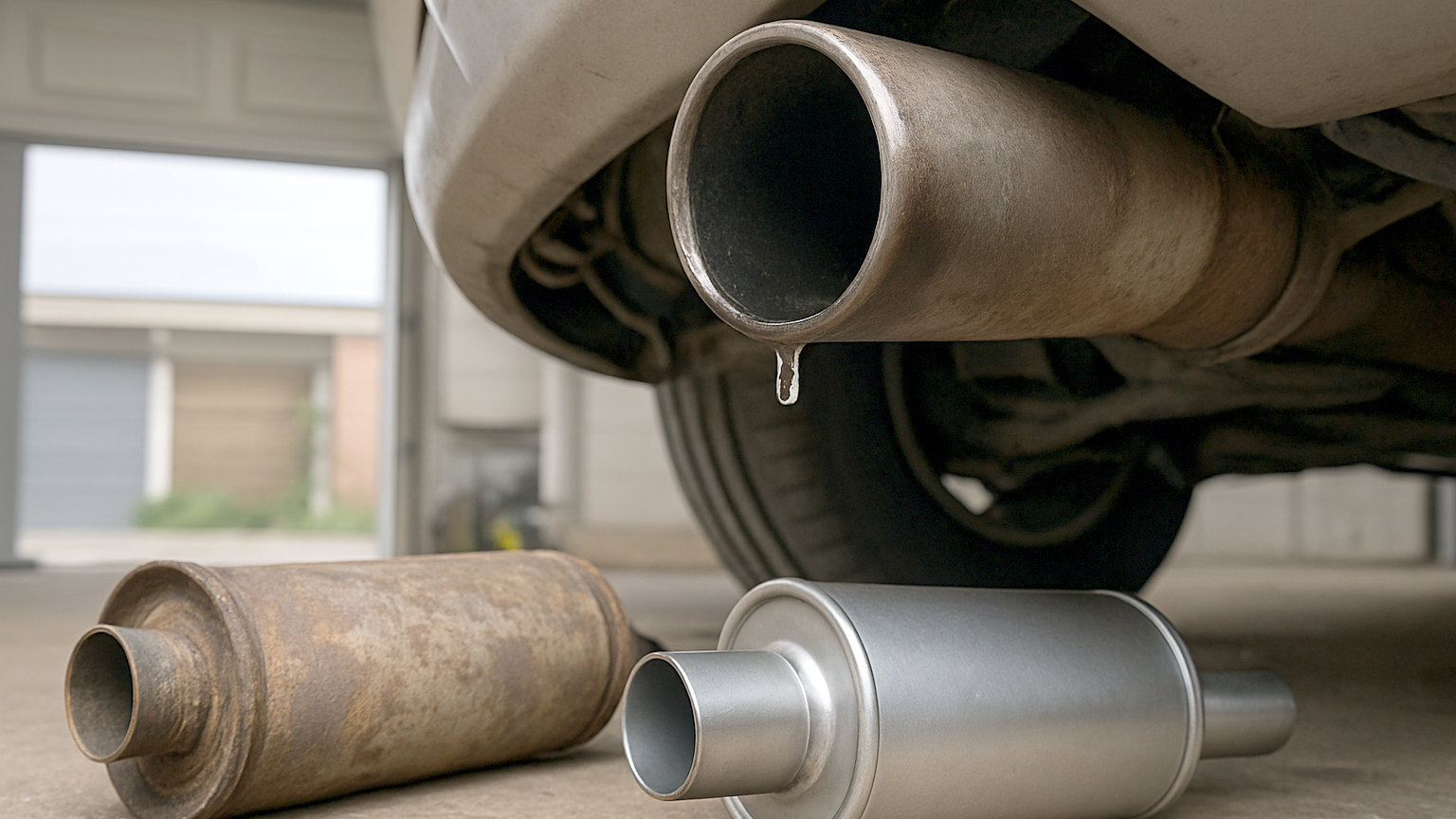
Water dripping from the tailpipe alarms a lot of drivers and is, in the great majority of cases, a sign that the engine is working exactly as it should. Burning fuel produces water as one of its main products, and on a cold exhaust system that water condenses and collects until it runs out of the pipe. There is one version worth investigating, but it is the exception rather than the rule.
Why does combustion produce water?
Petrol and diesel are hydrocarbons, made of hydrogen and carbon. Burning them combines the carbon with oxygen to make carbon dioxide and the hydrogen with oxygen to make water. A running engine produces a surprising quantity of it, roughly comparable to the volume of fuel consumed. When the exhaust is hot, that water leaves as invisible vapour. When the exhaust is cold, it condenses on the inside of the pipes and collects.
When is it completely normal?
On cold starts, on short journeys, and in cold or damp weather, which together cover most of the situations where people notice it. A clear, odourless, tasteless drip from the tailpipe on a January morning is condensation, and the accompanying white vapour cloud that clears within a minute or two is the same thing. Modern cars with efficient engines and catalytic converters produce noticeably more of it than older cars did.
How do you tell it is not coolant?
By smell and by the coolant level. Condensation is odourless and looks like plain water. Coolant escaping into the exhaust smells distinctly sweet, may be slightly coloured, and comes with an expansion tank level that keeps falling. It also produces thick white smoke that persists after the engine is fully warm, whereas condensation vapour clears within a minute or two. If the coolant level is steady and the smoke clears when warm, the water is normal.
Does it do any harm?
To the exhaust system, yes, over time. Water sitting inside silencers and pipes corrodes them from the inside, and combined with the acidic compounds in exhaust gas it is the main reason exhausts rust through. This is why cars used exclusively for short journeys need exhaust systems far more often than cars doing regular longer runs, since a properly hot exhaust dries itself out completely on every trip.
Why do short journeys make it worse?
Because the exhaust never gets hot enough for long enough to evaporate the accumulated moisture. A ten minute drive produces water and leaves most of it behind. The same applies to the engine oil, which collects moisture from combustion blow-by and needs sustained running to drive it off. This is why a mayonnaise-like film sometimes appears under the oil filler cap on cars used only for short trips, without any head gasket problem at all.
What about that creamy deposit under the filler cap?
It is worth understanding properly because it causes real anxiety. A thin film on the underside of the cap alone, on a car doing short journeys in winter, is condensation and clears after a decent run. A thick creamy emulsion on the dipstick and throughout the oil, with a rising oil level and overheating, is coolant in the oil and is a serious matter. The location and quantity are what distinguish them.
What should you actually check?
Look at the coolant level cold once a week for a few weeks. If it holds steady, the water from the exhaust is condensation and needs no action at all. If it falls, have a combustion gas test done. And if the car does mostly short journeys, build in a longer run once a week, which dries out the exhaust and the oil and extends the life of both.
Beyond that, water dripping from the tailpipe needs no action whatsoever. It is one of the few things a car does that looks like a fault and is actually a sign that combustion is working properly.


