
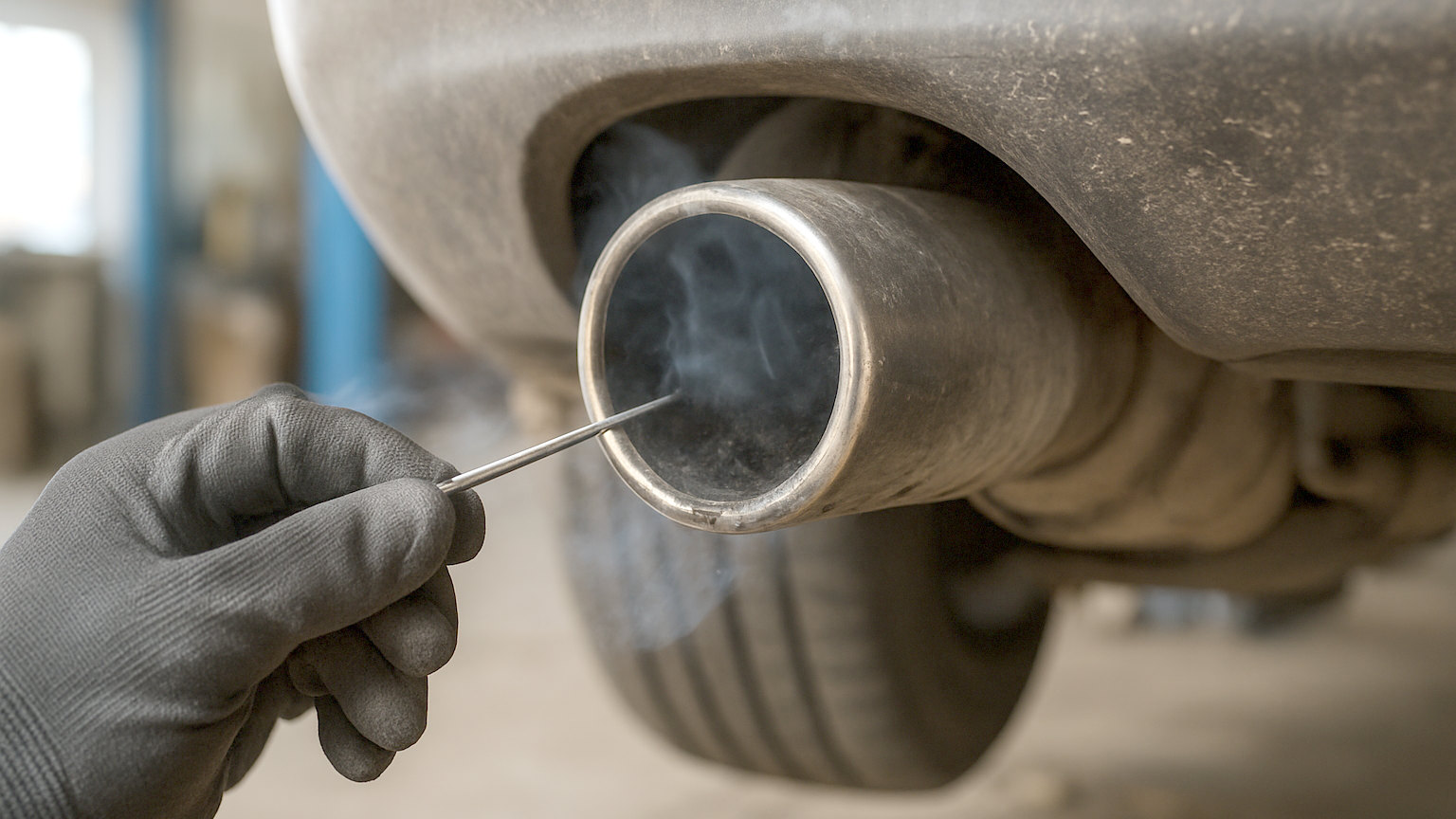
Smoke confined to the first few seconds after a cold start, which clears completely and never reappears during the day, is describing something that collected while the car stood overnight and was then burned off in one go. That pattern is genuinely informative, because very few faults behave that way, and the ones that do are usually less serious than continuous smoking.
What accumulates overnight?
Oil, mostly. When the engine stops, oil pressure disappears and gravity takes over. Anything that should stop oil moving downward but has become worn will allow a small amount to seep into places it should not be. The classic example is the valve stem seal, which sits at the top of each valve guide and prevents oil in the cylinder head running down the valve stem into the combustion chamber. Over eight hours, a worn seal lets enough through to produce a visible puff.
How do you recognise valve stem seal smoke?
It is blue, it appears within the first two or three seconds of starting, it lasts for perhaps ten to thirty seconds, and then it stops entirely. It is worst after the car has stood for a long period, so it is far more obvious on a Monday morning than after a lunch stop. Crucially it does not return under acceleration, which is what separates it from piston ring wear. Many otherwise healthy high mileage engines do this.
Does this mean the engine is worn out?
Not necessarily, and this is worth saying plainly. Valve stem seals are small rubber components that harden with age and heat cycles, and they can perish on an engine whose bores and rings are in perfectly good condition. Oil consumption from seals alone is usually modest. On many engines the seals can be replaced without removing the cylinder head, using compressed air to hold the valves closed, which makes it a moderate job rather than a rebuild.
Could it be the turbocharger?
On a turbo car it is worth considering. A turbo with worn shaft seals allows oil to pool in the intake while the car stands, which is burned off on the next start. The distinguishing features are that the smoke is often heavier and lasts longer than valve stem seal smoke, there may be oil visible in the intercooler pipework, and there is frequently a change in the turbo noise. Since a failing turbo can damage the engine, checking it is sensible before assuming seals.
What if the startup smoke is white?
Thin white vapour that clears in a minute or two is condensation and entirely normal, especially on a cold damp morning. Thick white smoke during cranking on a diesel, with a fuel smell and rough running for the first minute, is unburnt fuel from failed glow plugs. Thick white smoke that persists after warming up, smells sweet and comes with coolant loss is a different matter entirely and needs proper investigation.
Is it worth fixing?
It depends on the oil consumption and the car. A brief puff on a fifteen year old car using very little oil is something many owners reasonably live with, monitoring the level and topping up as needed. If the consumption is significant, if the smoke is getting worse each month, or if the car needs to pass an emissions test, then repair becomes worthwhile. The deciding factor is usually how much oil is disappearing rather than how visible the smoke is.
What should you keep an eye on?
Check the oil weekly and keep a written note of how much you add and over what mileage, because that record turns a vague impression into evidence. Watch whether the smoke duration is increasing. And avoid the temptation to switch to a much thicker oil to reduce it, since that can slow cold circulation and cause more wear at startup than the smoke itself ever would, particularly on an engine with variable valve timing.


