
Smoke coming from under the bonnet is a different situation from smoke at the tailpipe, and it needs a different response. Exhaust smoke is a diagnosis to work through at your convenience. Engine bay smoke means something is burning, leaking onto something hot, or overheating right now, and the correct first action is to stop the car rather than to work out what it is while still driving.
What should you do immediately?
Pull over somewhere safe as soon as you can, switch off the engine and get everyone out of the car and away from it. Do not open the bonnet fully straight away, particularly if you suspect fire, since a sudden supply of air can turn a smouldering situation into a burning one. Release the catch and let things settle for a few minutes if there is any doubt. If there are flames rather than smoke, stand well clear and call the fire service.
How do you tell steam from smoke?
Steam is white, rises quickly, dissipates within seconds and smells faintly sweet if it is coolant. It is usually accompanied by a rising temperature gauge and often by a hissing noise. Oil smoke is bluer or greyer, hangs in the air, and smells acrid and burnt. Electrical smoke is often thin and grey with a distinctive sharp plastic smell, and it may come with lights or systems failing at the same moment. The smell tells you more than the appearance.
What causes oil smoke in the engine bay?
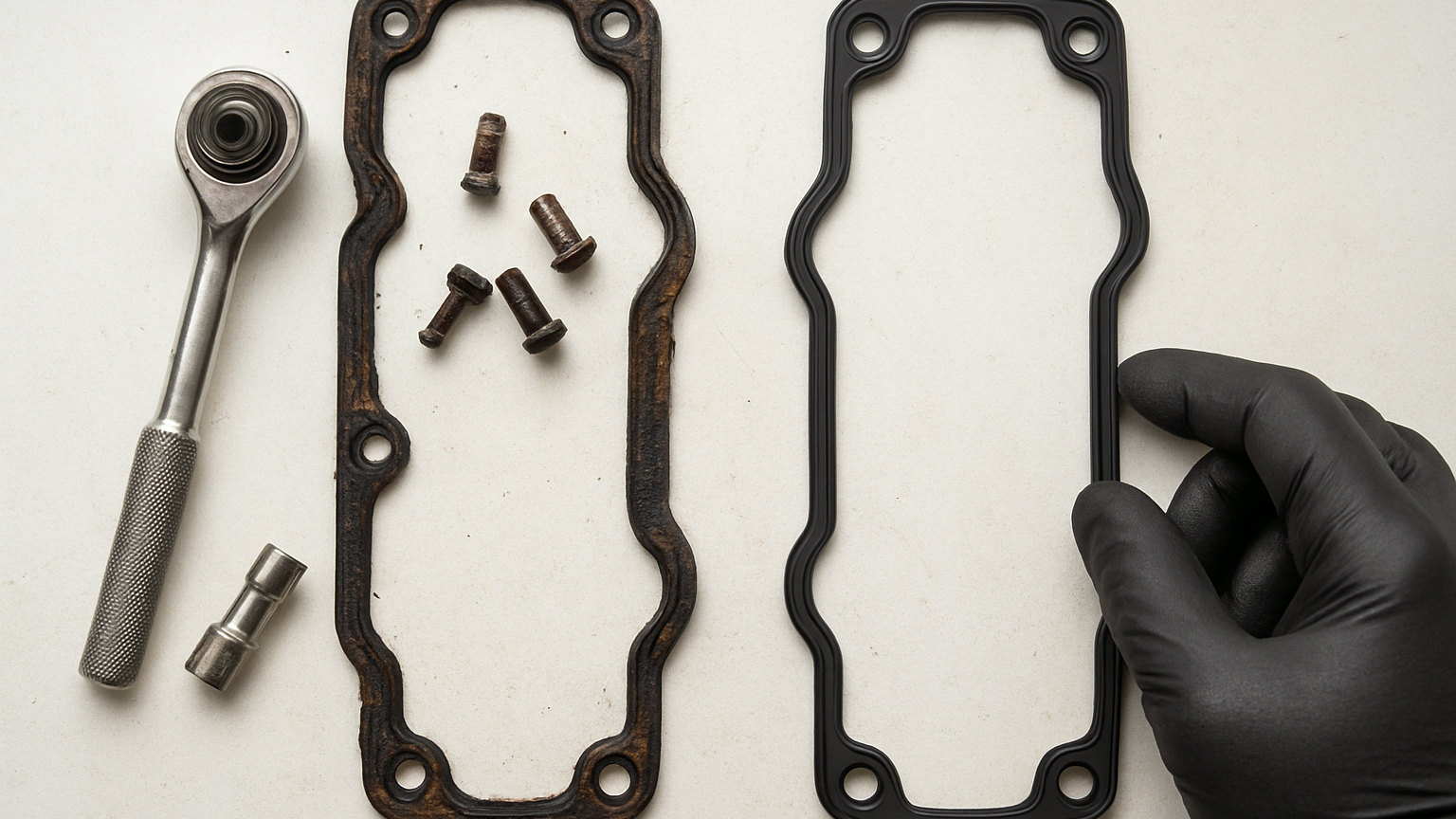
Oil leaking onto a hot exhaust manifold or turbocharger, which produces a great deal of smoke from a small quantity of oil. Common sources are a rocker cover gasket, a leaking oil filter housing, a turbo oil feed pipe or an overfilled sump. It smells strongly and looks alarming, but it is usually a leak to be fixed rather than an emergency, provided the quantity is small. A steady drip onto a manifold is a genuine fire risk and should not be ignored.
What if it is coolant?
Steam from a burst hose, a leaking radiator or a failed housing means the engine is losing coolant and will overheat within a very short distance. Stop, switch off and wait for it to cool completely before opening anything, because a pressurised cooling system releases scalding coolant when opened hot. This is one of the few faults where continuing for even a mile or two can turn a hose replacement into a cylinder head repair.
How serious is an electrical burning smell?
Very. Burning insulation smells sharply of hot plastic and it means a circuit is drawing far more current than it was designed for, usually through a short or a failing component. Wiring fires spread quickly and are difficult to put out. If you can smell it, stop, switch off, and disconnect the battery if it is safe and accessible to do so. Do not restart the engine to see whether it happens again.
Could it be something harmless?
Occasionally. A brand new car or one with a recently replaced exhaust or heat shield will smoke lightly for the first few heat cycles as protective coatings burn off. Water or road salt on a hot exhaust after driving through a puddle produces steam. A small amount of oil spilled during a service will smoke for a few journeys and then stop. If the smoke reduces with each trip and there is no leak, that is probably what happened.
What should happen next?
Unless you are confident it was spilled oil burning off, have the car inspected before driving it any distance. Note where the smoke came from, what colour it was and what it smelled like, since those three details narrow the cause considerably. Arrange recovery rather than driving on if there was steam, an electrical smell, or any warning light alongside it, because all three of those have consequences beyond an inconvenient repair.


