
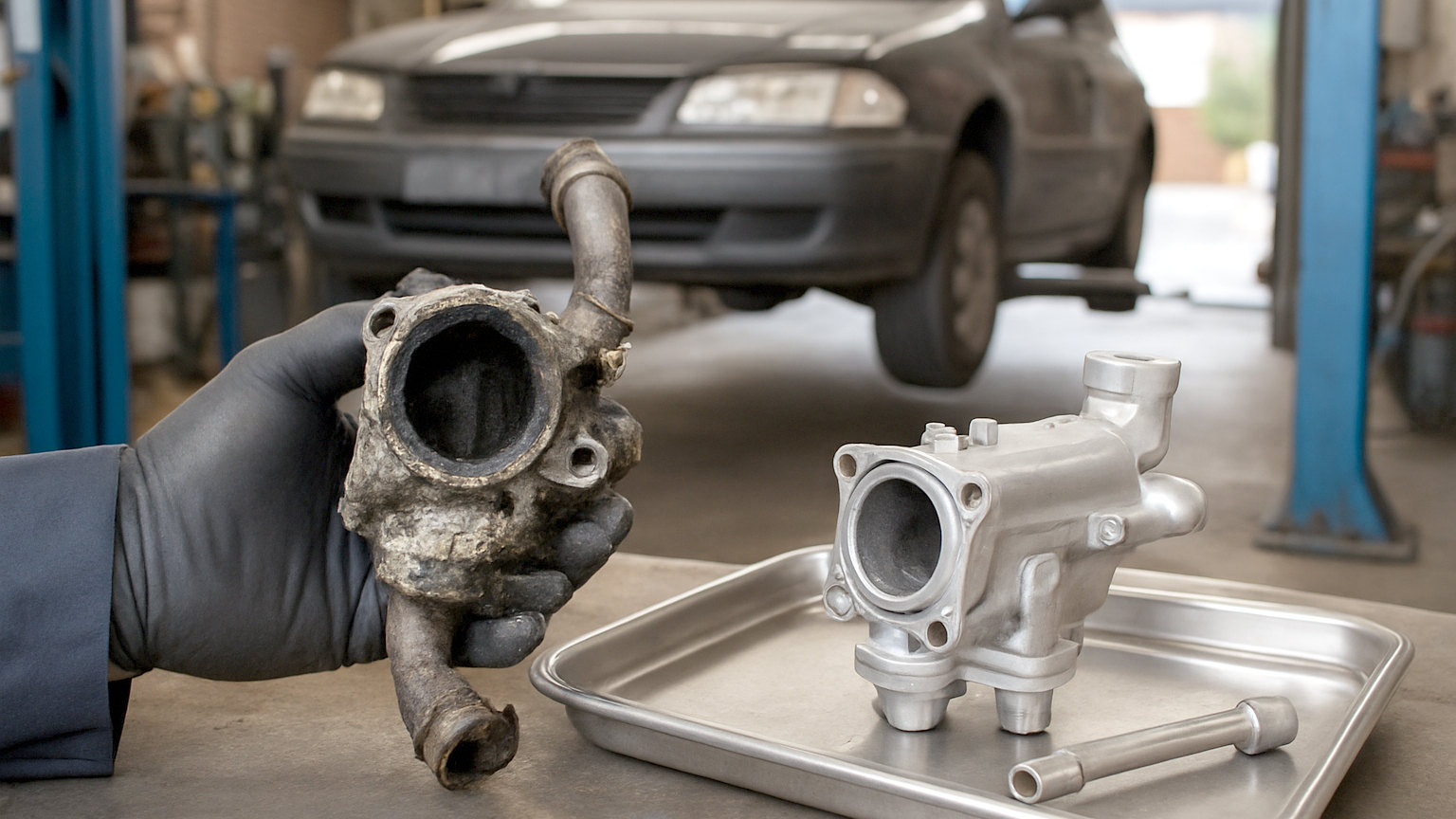
A modern diesel fitted with a particulate filter should produce almost no visible smoke under any normal condition, because the filter traps the soot before it reaches the tailpipe. So a diesel that has started smoking visibly is making two statements at once: something is producing more soot than it should, and the filter is no longer catching all of it. Both of those deserve attention rather than acceptance.
What produces the extra soot?
Soot forms when fuel cannot find enough oxygen to burn completely, so the causes divide into too much fuel or too little air. Worn injectors with degraded spray patterns deliver fuel in droplets that burn poorly. A turbo failing to reach its target boost supplies too little air. A sticking EGR valve fills the cylinder with inert exhaust gas in place of fresh oxygen. A blocked air filter restricts intake flow. Each of these produces the same result from a different direction.
How do injectors cause it?
A diesel injector atomises fuel into an extremely fine mist at very high pressure, and everything about clean combustion depends on that spray pattern. As the nozzle wears, the pattern degrades and larger droplets form, which burn incompletely and produce soot. A garage can read injector correction values on a diagnostic tool, showing how far the management is compensating for each one, which identifies a weak injector far more reliably than guessing from smoke alone.
What role does the turbo play?
A diesel relies on boost to supply enough oxygen for the fuel it injects at higher loads. When boost falls short, whether through a split intercooler pipe, a sticking variable vane mechanism or a failing actuator, the fuelling continues while the air does not, and the mixture goes rich. The car usually feels flat as well as smoky, and there may be an underboost fault code stored even if no warning light has appeared.
Why does the EGR valve matter?
Its whole function is to feed exhaust gas back into the intake to reduce combustion temperatures, and when it sticks partly open it does that at moments when the engine needs fresh air instead. The result is black smoke, rough running and a clear lack of power, usually intermittent as the valve sticks and frees itself. Because it is a common fault and cleaning is often effective, it is worth checking before more expensive components are considered.
What if the particulate filter is involved?
A filter that has been removed will let all the soot through, and that is both an MOT failure and an offence. A filter that is intact but heavily loaded will restrict flow and cause the engine to work harder, which can itself increase soot production. And a filter that is cracked internally will pass soot while appearing present. If a diesel that never smoked has started to, the condition of the filter is a legitimate question to ask.
Does driving style contribute?
Considerably. Short cold journeys never allow the exhaust to reach the temperatures needed for regeneration, so soot accumulates, the EGR valve fouls and the turbo vanes gum up with deposits. These are the same three causes listed above, all produced by the same driving pattern. A weekly run of half an hour at sustained speed genuinely reduces all of them, and on a car used exclusively in town it is close to essential.
What should you have checked?
Ask for injector correction values, boost pressure and EGR operation to be looked at in live data, plus the differential pressure across the particulate filter. That combination covers every likely cause and costs one diagnostic session rather than a sequence of replaced parts. Get it done before the MOT rather than after, since a diesel producing visible smoke is unlikely to pass the opacity test, and the free acceleration runs that test involves are unkind to an engine that already has something wrong with it.


