
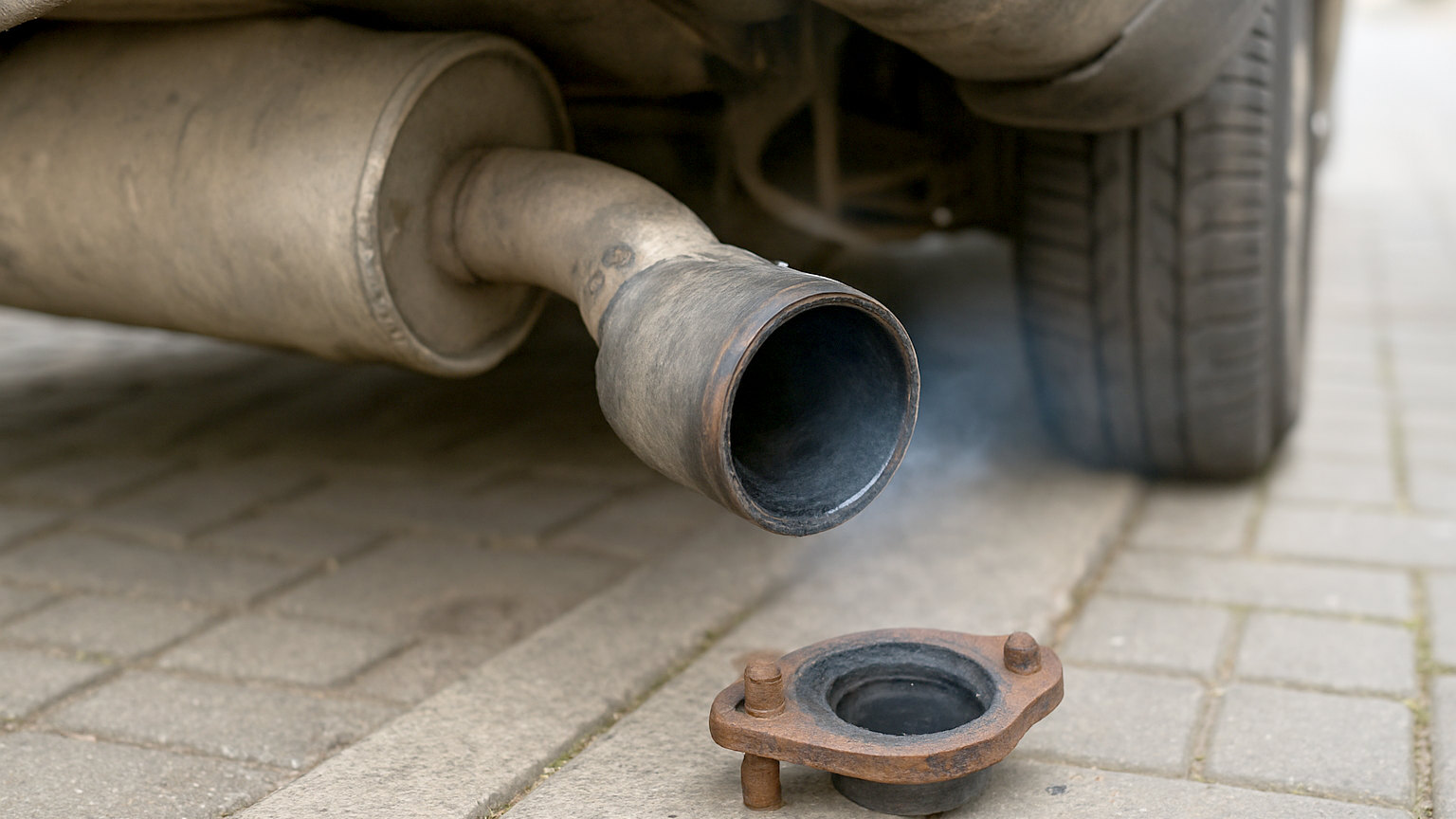
Blue smoke means engine oil is reaching the combustion chamber and being burned along with the fuel. It has a sharp acrid smell that is quite different from ordinary exhaust fumes, and it usually comes with oil consumption that shows up on the dipstick between services. The useful part is that oil can only enter from a small number of places, and the moment the smoke appears identifies which.
What does smoke on startup tell you?
A puff of blue on the first start of the day that clears within twenty or thirty seconds and does not return points at valve stem seals. These small rubber seals sit at the top of each valve guide and stop oil in the cylinder head draining down the valve stem into the chamber. When they harden with age, oil seeps past overnight and is burned off in the first few seconds of running. It is a very common high mileage symptom and the engine may otherwise be entirely healthy.
What does smoke under acceleration mean?
Blue smoke that appears when you accelerate hard and worsens with load points at the piston rings. Worn rings, or bores that have worn oval, allow oil from the crankcase past the pistons and into the chamber. This version usually comes with meaningful oil consumption, reduced compression, and sometimes a rougher idle. Unlike valve stem seals, it indicates genuine wear in the bottom end of the engine and the remedy is a rebuild rather than a repair.
What about smoke when lifting off?
Smoke that appears when you close the throttle after a period at higher revs, often noticed as a cloud in the mirror when slowing for a roundabout, is classic valve stem seal behaviour. Closing the throttle creates strong vacuum in the inlet, which draws oil past worn seals. If a car smokes on the overrun and on startup but is clean under acceleration, the seals are the likely cause and the rings are probably fine.
Could it be the turbocharger?
On a turbo car, yes, and it should be checked before any engine work is considered. A turbo with worn shaft seals passes oil straight into the intake, producing blue smoke that is often heaviest under acceleration or after a period of idling. The clues are oil pooling inside the intercooler pipework, a whining or screeching noise that has changed recently, and loss of boost. A failing turbo needs attention promptly because debris from it can enter the engine.
Can it be something simpler?
Sometimes. A blocked or failed crankcase breather system raises pressure inside the engine and forces oil past seals that would otherwise cope, which produces blue smoke on an engine that is not actually worn. Overfilling the sump does the same. Both are cheap to check and worth ruling out first, because replacing a breather valve is a very different proposition from rebuilding an engine.
How much oil consumption is normal?
More than most people expect. Many manufacturers consider up to a litre per thousand miles acceptable on certain engines, though most healthy cars use far less than that. What matters is the trend: an engine that has always used a little and continues to is different from one that has suddenly started. Keep a note of how much you add and when, since that record is the most useful evidence you can bring to a diagnosis.
Is it worth repairing?
Valve stem seals can be replaced without removing the cylinder head on many engines, which makes it a moderate job rather than a major one. Worn rings mean a strip and rebuild, and on an older car that frequently exceeds the value of the vehicle. Turbo replacement sits in between. The honest approach is to identify which of the three it is before deciding, and to keep the oil topped up in the meantime, because running low turns a smoky engine into a seized one.


