
Black smoke is unburnt fuel leaving the engine as soot, and it means the balance between fuel and air has gone wrong in the direction of too much fuel. That can happen because more fuel is being delivered than intended, or because the air side has been restricted so the fuel that is being delivered can no longer be burned. Both produce the same visible result and both waste a considerable amount of money.
Why does the mixture go rich?
The engine management calculates fuelling from measured airflow, so anything that misreports airflow causes a mixture error. A contaminated mass airflow sensor over-reporting the air entering will cause the system to inject too much fuel. A coolant temperature sensor stuck reporting a cold engine keeps the cold start enrichment running permanently, which is a very common cause and comes with poor fuel economy and a raised idle. Failing oxygen sensors remove the feedback that would otherwise correct all of this.
What about the injectors themselves?
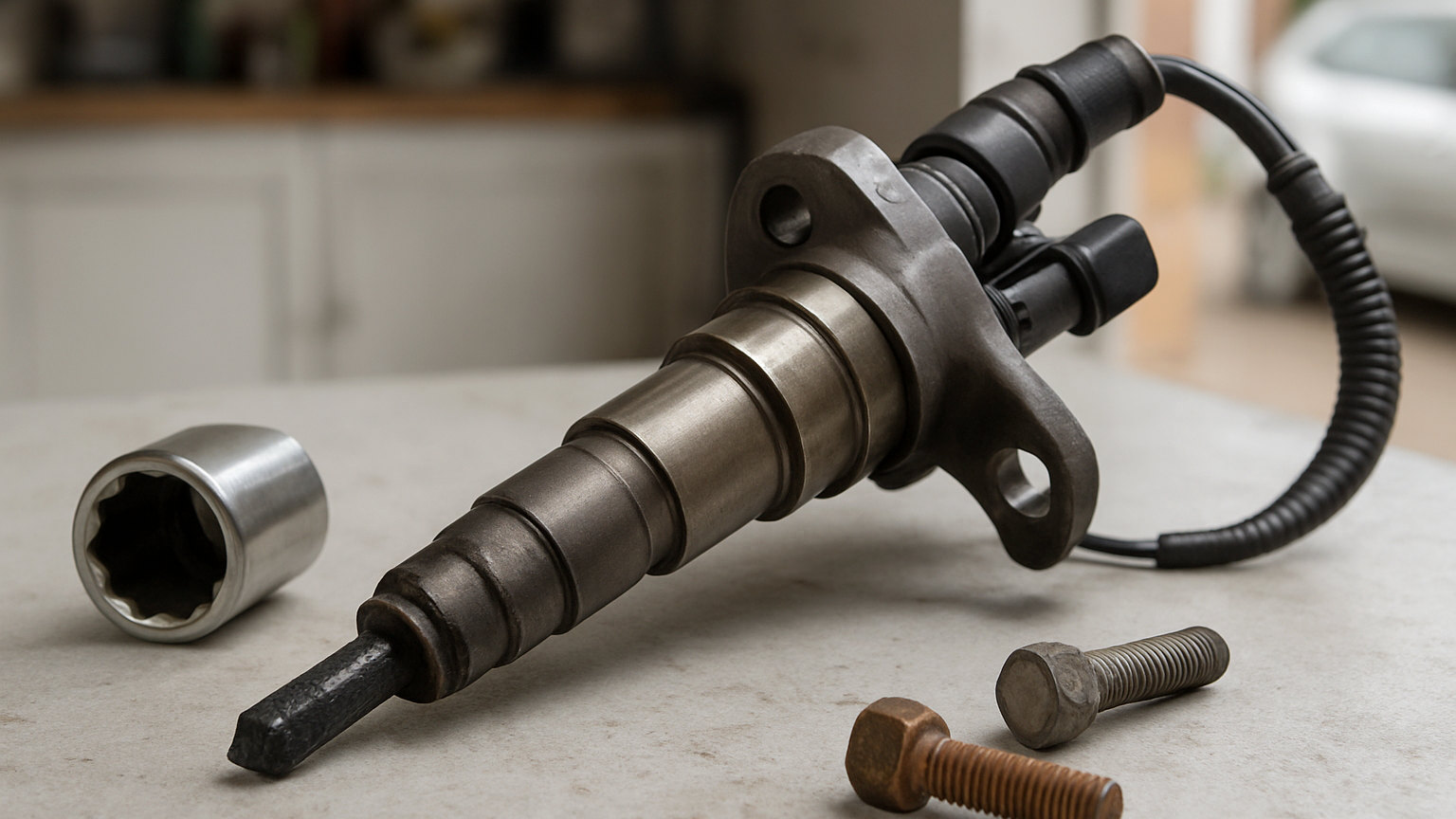
An injector that leaks or fails to close fully delivers fuel continuously rather than in a measured pulse, which produces black smoke, a strong fuel smell, rough running and often a misfire on that cylinder. Excessive fuel pressure from a failed regulator does the same across every cylinder. On direct injection engines, fuel washing down the bores also dilutes the engine oil, which is worth checking on the dipstick if the level has been rising rather than falling.
Can restricted air cause it?
It can, and this is the cheapest possibility. A severely blocked air filter genuinely limits airflow at high load, producing black smoke under acceleration on older engines in particular. A collapsed intake duct or a blocked intake snorkel does the same. Checking the air filter takes minutes and holding it up to a light tells you immediately whether it is finished, which makes it a sensible first look before any diagnostic work.
Why do diesels smoke black more readily?
Because a diesel controls power by varying fuel quantity rather than by throttling air, so the mixture is much richer at high load by design and any imbalance shows immediately. Worn injectors with poor spray patterns, a turbo not delivering full boost, a sticking EGR valve admitting exhaust gas in place of fresh air, and a blocked air filter all produce black smoke under acceleration. A little transient smoke under hard acceleration is normal on older diesels; a continuous cloud is not.
What damage does it do?
Unburnt fuel washes oil from the cylinder walls, which accelerates bore wear, and it dilutes the oil in the sump, reducing its ability to protect the bearings. Soot coats the catalytic converter and, on a diesel, loads the particulate filter far faster than normal, which brings forward an expensive blockage. Fuel consumption rises noticeably. None of that is immediately dramatic, which is exactly why black smoke often gets tolerated for far longer than it should be.
Will it fail the MOT?
Very likely. Visible smoke is assessed at the test and excessive emissions are a straightforward failure, with diesels subject to a metered smoke opacity test that a genuinely smoky car will not pass. A car producing visible black smoke under acceleration should be diagnosed before the test rather than after, since the fix is usually the same either way and a retest is avoidable.
What should be checked first?
Have the fault codes and fuel trims read, since a large negative long term trim confirms the engine is having to remove fuel and effectively proves a rich running condition. Check the air filter and the coolant temperature sensor reading. Those steps identify the cause in most cases and cost far less than replacing injectors on suspicion, which is where these diagnoses often go wrong.
It is also worth checking the oil level, because a car running rich enough to smoke black is washing fuel down the bores and diluting the oil, and a level that has risen rather than fallen confirms it.


