
An engine that overheats is not producing more heat than usual. It is failing to get rid of the heat it always produced, and that failure has a short list of possible causes. Working through them in order of likelihood rather than in order of drama will find the fault in most cases, and it will usually find it before the repair bill grows into something serious.
How does the cooling system actually work?
Coolant is pumped around the engine block, absorbs heat from the metal, and carries it to the radiator where airflow removes it before the coolant returns to start again. A thermostat holds that flow back until the engine reaches working temperature, and a fan pulls air through the radiator when the car is not moving fast enough to do it naturally. Every overheating fault is a failure of one link in that chain, which is why the diagnosis is more systematic than it first appears.
Why is low coolant the first thing to check?
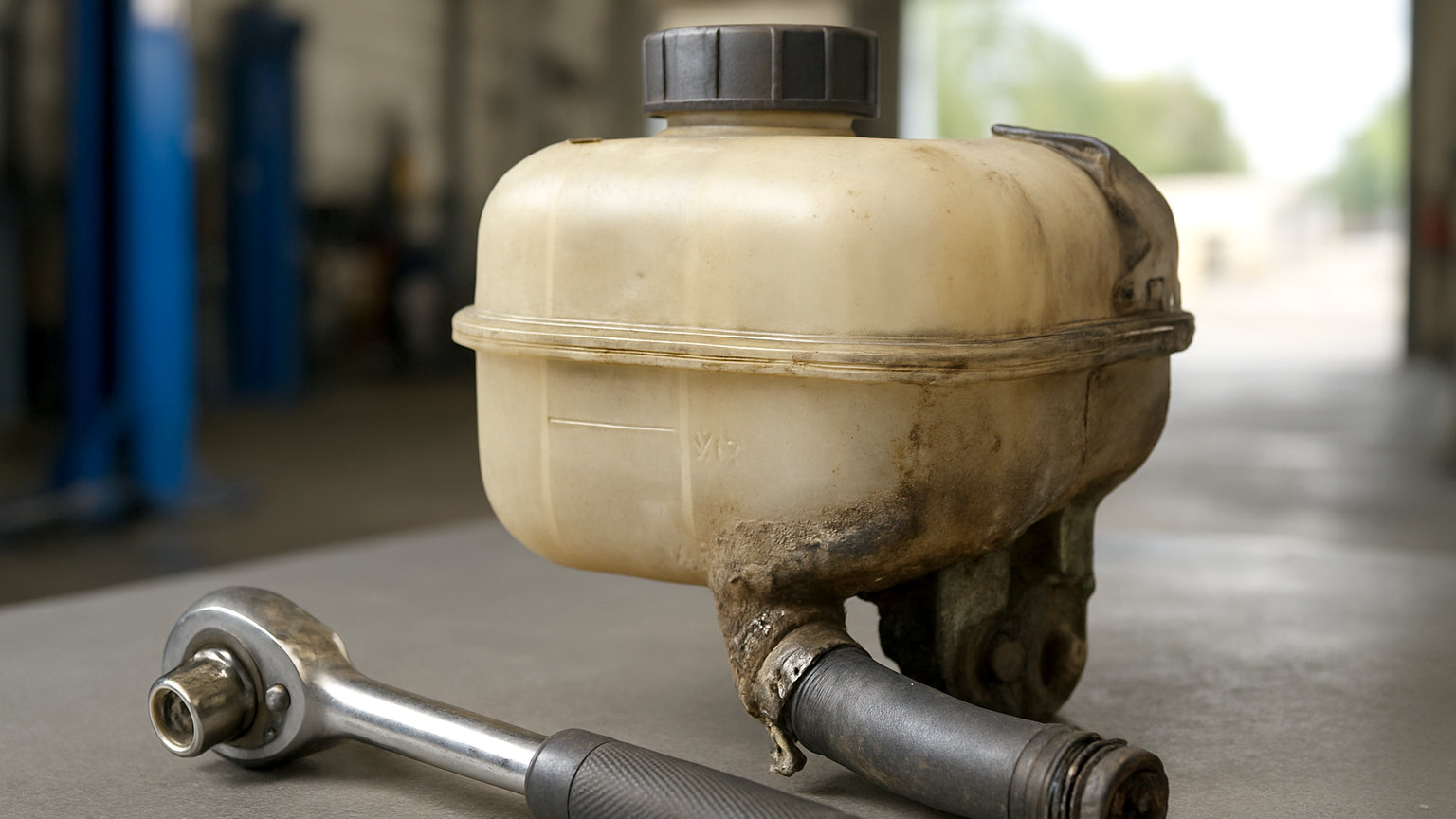
Because it is by far the most common cause, and because it is visible without tools. Coolant that has dropped below the minimum mark on the expansion tank cannot carry heat away properly, and air pockets in the system make the problem considerably worse than the missing volume alone would suggest. Check the level when the engine is stone cold, never when it is hot, and note that a system which needs topping up regularly has a leak somewhere that will keep coming back.
What does a stuck thermostat do?
A thermostat that sticks closed blocks the route to the radiator entirely, so coolant circulates within the engine getting steadily hotter with nowhere to lose that heat. The temperature gauge climbs quickly and steadily, often within a few miles of a cold start, and the top radiator hose stays cool while the engine is clearly boiling. That combination is close to a diagnosis on its own, and thermostats are among the cheapest parts on the car.
When is the fan the culprit?
The pattern gives this one away. If the car sits at normal temperature on the open road and climbs in slow traffic or at a standstill, the radiator is working when air is forced through it and not working when it needs a fan to do the job. Fans fail through the motor itself, the relay that switches them, the fuse, or the temperature sensor that decides when to ask. Standing beside a hot car with the bonnet up and listening for the fan cutting in is a useful five minute test.
What about the water pump and radiator?
A water pump that has failed stops circulation altogether and produces rapid overheating regardless of speed, often accompanied by a whine or a coolant leak from behind the pulley. Radiators block up over the years, either externally with leaves, insects and road debris packed into the fins, or internally with corrosion and old degraded coolant. Both reduce the system capacity gradually, so the car copes in winter and struggles the first hot week of summer.
Which cause is the serious one?
A failed head gasket can push combustion gases into the cooling system, which causes overheating and pressurises the expansion tank. The clues are bubbles appearing in the tank while the engine runs, coolant disappearing with no external leak, white sweet-smelling smoke from the exhaust, and a mayonnaise-like deposit under the oil filler cap. This is the one cause where continuing to drive turns an expensive repair into a replacement engine.
Where should you start?
Check the coolant level cold, look underneath for drips and at the engine bay for white or coloured staining, then note whether the car overheats in traffic, at speed, or both. Those three pieces of information narrow the cause down enormously and cost nothing but ten minutes. Whatever the answer, treat a rising gauge as a reason to stop rather than a reason to hurry home, because heat damage to an aluminium cylinder head happens far faster than most drivers expect.


