
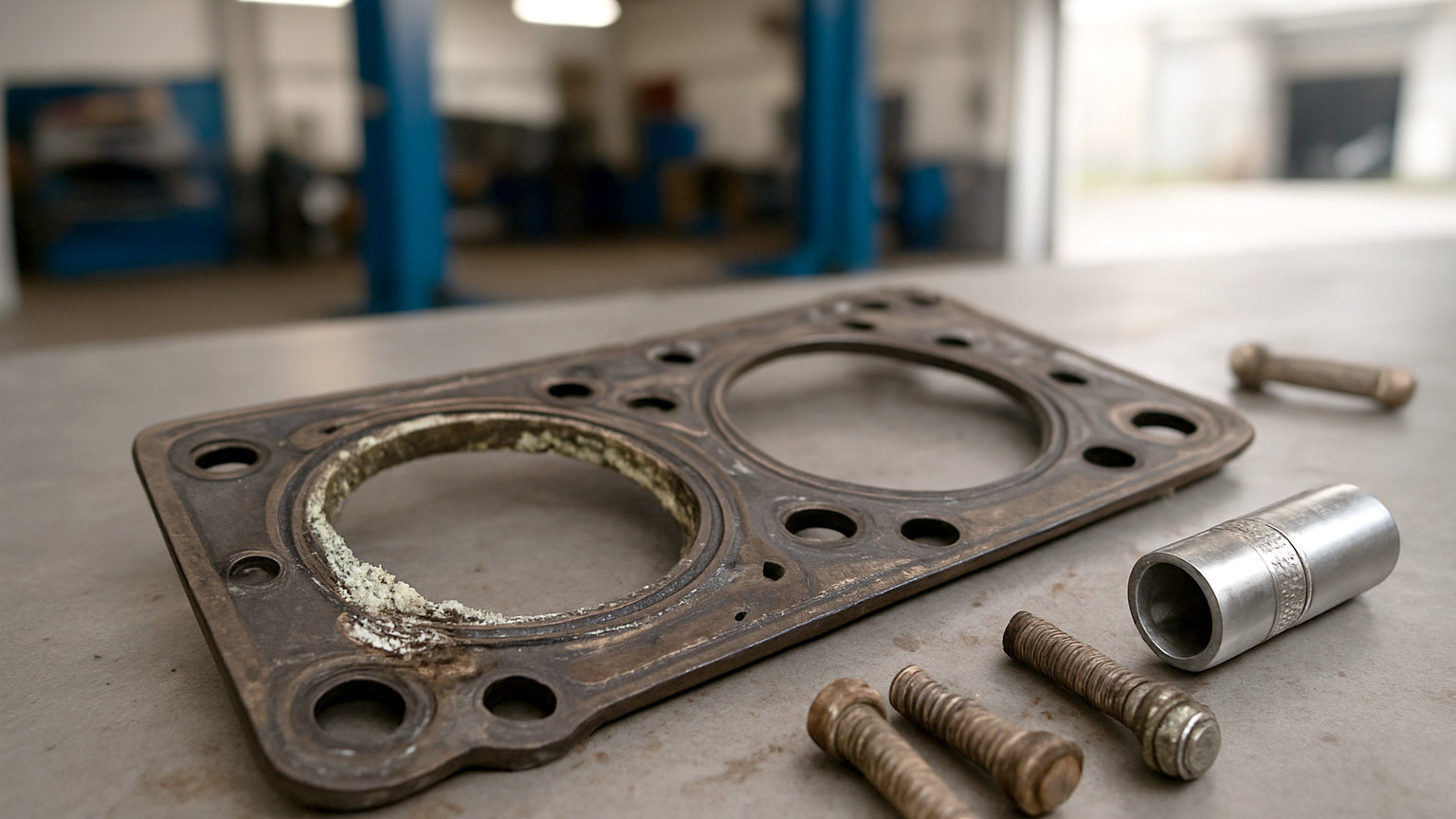
Every car produces white vapour from the exhaust on a cold morning, and almost all of it is harmless condensation that clears within a minute or two of driving. The version worth worrying about looks similar but behaves differently: it continues once the engine is fully warm, it is thicker, and it carries a faintly sweet smell. That combination means coolant is being burned inside the engine, and it is one of the few symptoms that genuinely justifies stopping the car.
How do you tell condensation from burning coolant?
Time and temperature are the test. Normal condensation appears on cold starts, is thin and wispy, and disappears entirely within a couple of minutes as the exhaust system warms and dries out. It is worse in cold damp weather and absent on a warm afternoon. Burning coolant produces a denser, whiter cloud that persists after ten or fifteen minutes of running, gets worse under load, and does not care what the weather is doing.
Why does coolant smell sweet?
Antifreeze is based on glycol, which has a distinctly sweet syrupy smell that is quite unlike petrol, diesel or burnt oil. Once you have noticed it you will recognise it every time. That same smell inside the cabin usually points to a leaking heater matrix rather than a head gasket, so where you smell it matters as much as the smell itself. Sweet-smelling smoke from the exhaust means the coolant has reached the combustion chambers.
What else confirms a head gasket problem?
Several signs tend to arrive together. The coolant level falls with no leak on the ground. The expansion tank becomes hard and pressurised within a few minutes of a cold start, because combustion gases are being forced into the cooling system. Bubbles appear in the tank while the engine idles. A creamy beige deposit like mayonnaise forms under the oil filler cap and on the dipstick, which means coolant has entered the oil. Any two of these together make a strong case.
Not all of them appear in every failure, because gaskets fail in different places. Some let combustion gas into the coolant without letting coolant into the oil, some do the reverse, and some leak externally down the side of the block. This is why a proper test is worth more than a symptom checklist.
How does a garage confirm it?
The standard check is a combustion gas test, where a chemical fluid held over the expansion tank changes colour if exhaust gases are present in the coolant. It takes a few minutes, costs very little, and gives a clear answer. A compression or leak-down test adds detail by showing which cylinder is affected, and a pressure test rules out ordinary external leaks. Getting this confirmed before any work begins matters, because head gasket repairs are expensive and are occasionally recommended for cars that turn out to have a failed pressure cap.
Could white smoke mean something else?
On a diesel, thick white smoke during cranking or shortly after a cold start usually means unburnt fuel rather than coolant, and points at failed glow plugs or an injection timing problem. It smells of diesel rather than sweet. Blue smoke, which is a different colour once you look properly, means burning oil, and black smoke means excess fuel. Identifying the colour honestly in daylight is worth doing before drawing conclusions.
Can you keep driving?
No, and this is the point of the article. Coolant in the oil destroys bearings quickly, and an engine losing coolant will overheat and warp its cylinder head. A gasket repair on a warped head becomes a head skim or a replacement head, and a bearing failure becomes a replacement engine. The mileage covered between noticing the smoke and stopping is very often the difference between those outcomes, and there is no version of this fault that improves by being left alone for another week. Get it tested, get the answer in writing, and then decide what to do with the car.


