
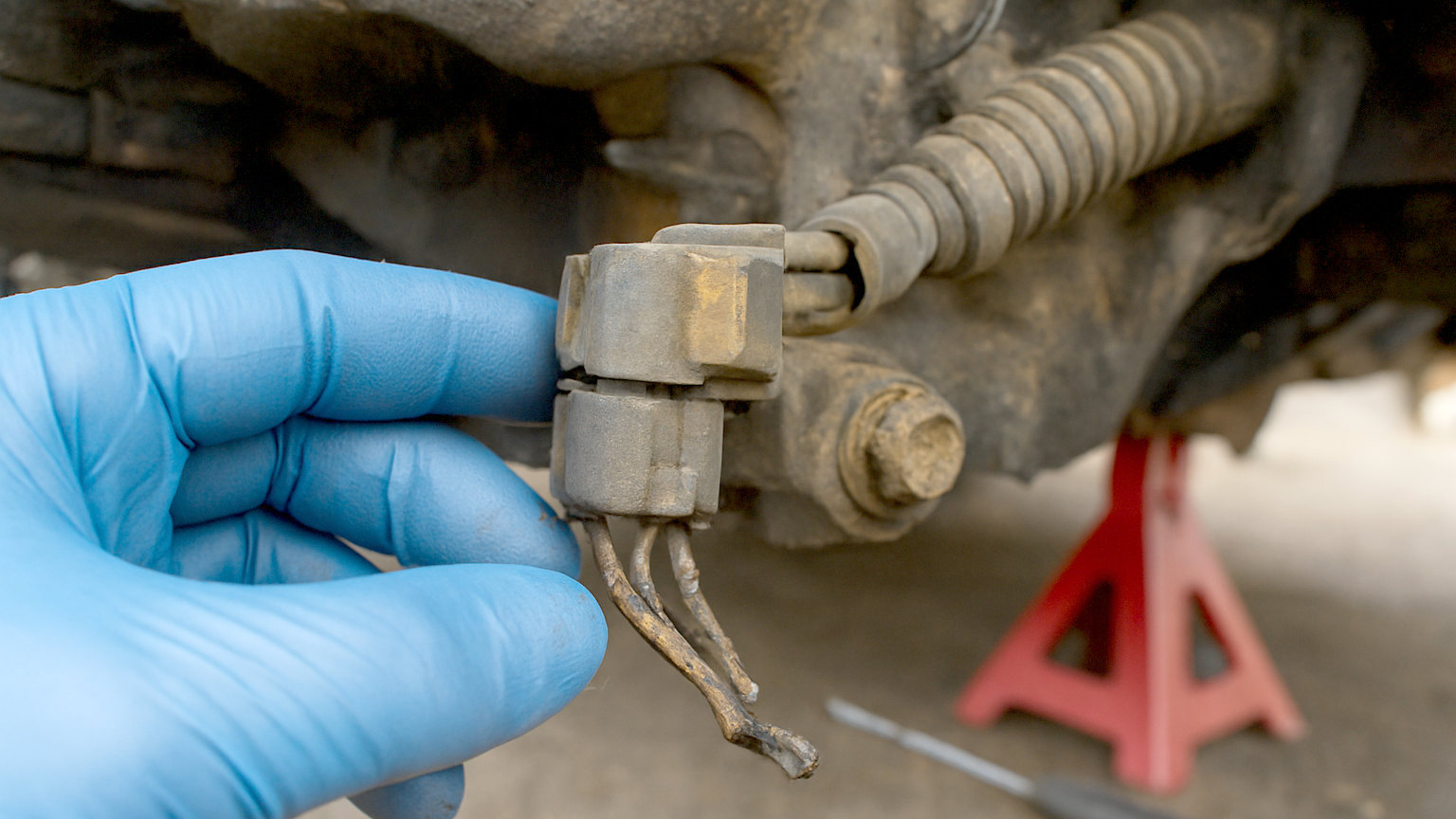
A cooling fan that never runs will let a perfectly healthy engine overheat in a traffic queue, and the fan motor itself is only one of five things that can be responsible. There is a fuse, a relay, a sensor or control module deciding when the fan is needed, the wiring joining all of it together, and finally the motor. Testing them in the right order avoids replacing an expensive assembly when a two pound relay was at fault.
How do you confirm the fan is genuinely not running?
Let the car idle from cold with the bonnet up, standing well clear of the belts and the fan blades, which can start without warning. As the gauge passes normal and continues to climb, the fan should cut in with an obvious rush of air. Do not switch the engine off the moment the fan fails to appear, but do not let the gauge reach the red either. If nothing has happened by the time the needle is clearly above normal, you have your answer.
What does the air conditioning test tell you?
On most cars the fan is commanded to run whenever the air conditioning compressor engages, using a different trigger from the engine temperature circuit. Switch the air con on with the engine idling and see whether the fan spins. If it does, the motor, its fuse and its relay are all healthy, and the fault sits in the temperature sensing side. If it does not run for either, the problem is more likely in the shared parts of the circuit. This one test splits the possibilities neatly in half.
Which are the cheap parts to check first?
Fuses and relays, in that order. Find the engine bay fuse box, identify the fan fuse from the lid diagram, and inspect it for a broken element. Then look for the fan relay, and if there is an identical relay elsewhere in the box serving something less critical, swap the two over and repeat the test. A fan that suddenly works after a relay swap has diagnosed itself, and relays are among the cheapest parts you can buy for a car.
What does a failed temperature sensor do?
Older cars often use a simple switch screwed into the radiator that completes the fan circuit at a set temperature, and these fail closed or open with age. Newer cars use a coolant temperature sensor feeding the engine management, which then decides when to run the fan. A sensor reporting a permanently low temperature will never trigger the fan, and will often cause poor fuel economy and slightly rough running alongside, because the same reading is used to calculate fuelling.
What if the fan runs all the time instead?
A fan that starts with the ignition and never stops is usually a sensor or switch that has failed in the closed position, or a relay whose contacts have welded together. It is far less dangerous than a fan that never runs, since the engine will simply take longer to warm up, but it drains the battery when the engine is off on some designs and it is a sign the circuit needs attention. It also means the fan itself is definitely working, which is useful to know.
How do you know the motor itself has failed?
Fan motors wear out at the brushes and bearings, and they usually give warning by becoming noisy, rumbling or screeching before they stop. A motor that is seized will often blow its fuse repeatedly, which is a useful clue when a replacement fuse fails within seconds. Applying power directly to the motor is the definitive test, but it needs care and a fused supply, and on many modern cars the fan is speed controlled rather than simply switched, which makes direct testing less straightforward than it used to be.
Is it safe to drive in the meantime?
Only on open roads where airflow does the fan job for you, and even then only as far as necessary. Avoid town driving, queues and slow-moving traffic entirely, because the temperature will climb within minutes of stopping. If you must move the car, watch the gauge constantly, run the heater on full hot to shed extra heat, and be prepared to pull over and switch off rather than sit in a queue hoping it holds.


