
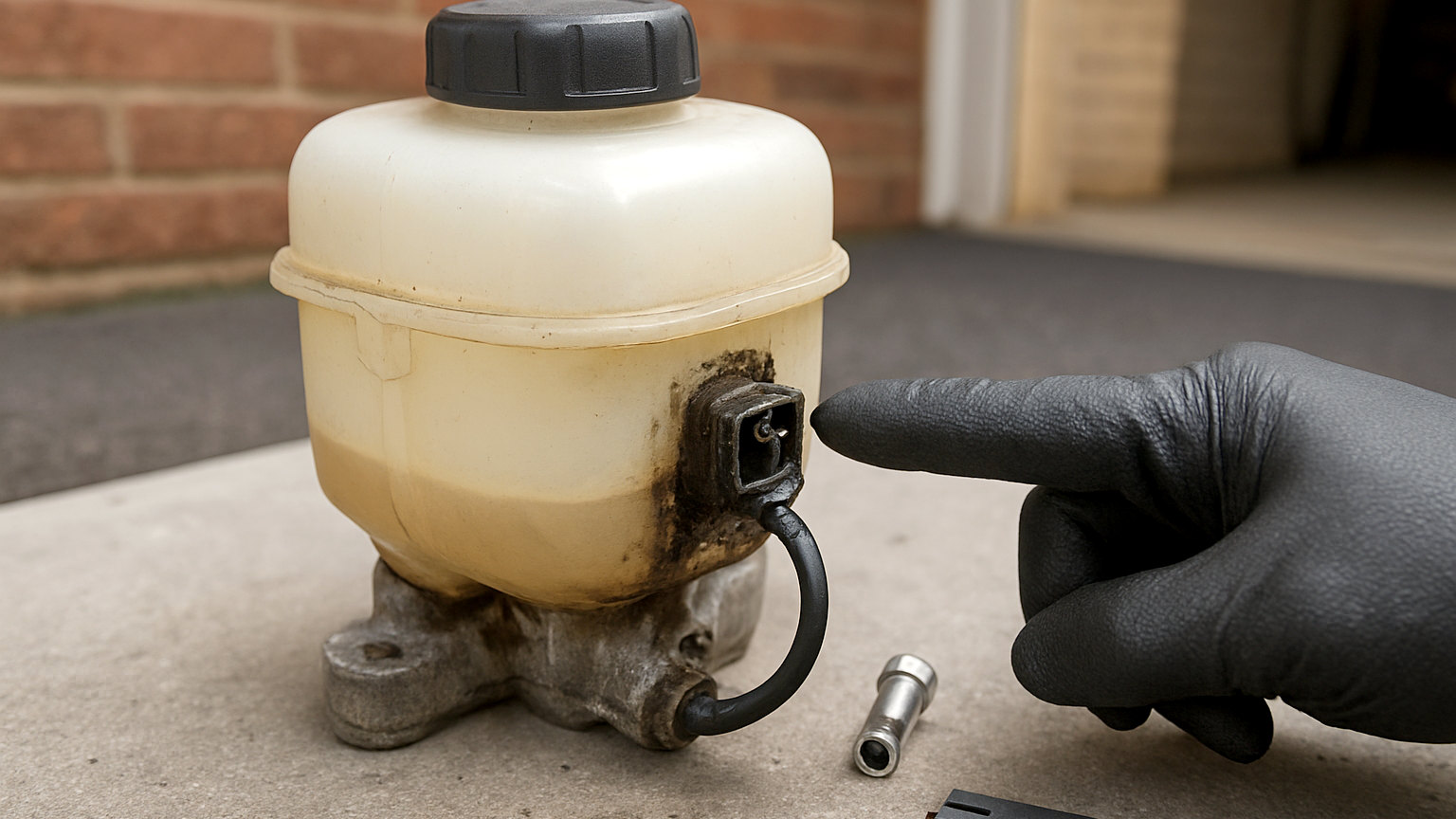
A coolant warning light glowing while the temperature needle sits reassuringly in the middle looks like a contradiction, and drivers frequently conclude the light must be faulty. In most cars it is not a contradiction at all, because the two are measuring completely different things. Understanding which is which turns a confusing dashboard into a clear instruction, and the instruction is usually to check the level rather than to keep driving.
What is the warning light actually monitoring?
Most cars have two separate systems. A temperature sensor in the engine block feeds the gauge and the engine management, and a level sensor, usually a float inside the expansion tank, triggers a low coolant warning. If the light is amber and shaped like a thermometer over waves, it is generally the level sensor telling you there is not enough coolant, even though what remains is at a perfectly normal temperature. A red light of the same shape is a temperature warning and means stop.
Why does the gauge not react immediately?
Because the sensor that feeds it is bathed in the coolant still present in the block, so it reads normal right up until the level falls far enough to expose it or to stop circulation. Once that happens the reading rises extremely quickly, sometimes faster than the needle can move. Modern gauges are also heavily damped by the software, deliberately held in the middle across a wide band of normal temperatures so that drivers are not alarmed by ordinary fluctuation. That makes them poor early warning devices by design.
What should you do when the light appears?
Stop somewhere safe when it is convenient, let the engine cool properly, and check the expansion tank level against the marks. If it is low, top up with the correct coolant type and note how much went in, because that figure matters when you describe the fault later. If the level is correct, the sensor or its wiring may be at fault, but that should be confirmed rather than assumed, since a genuine warning treated as a false one is how engines get damaged.
Can the light be wrong?
It can. Level sensor floats stick, particularly in systems with old degraded coolant, and the wiring connector at the tank sits in a hot dirty environment and corrodes. A light that comes on over bumps or on roundabouts and goes out again on level ground is often a sensor reading a sloshing surface at a level that is genuinely marginal, which means the coolant really is low even though the light is intermittent. Treat intermittent as low rather than as faulty.
What if the level keeps needing topping up?
Then the warning light has done its job and found a leak. A sealed system does not consume coolant, so repeated topping up means it is escaping somewhere, either externally as a fine spray that dries before it drips, into the cabin through the heater matrix, or internally past a head gasket. A pressure test at a garage will find the external leaks quickly, and a combustion gas test will rule the head gasket in or out.
Is it safe to drive on?
Briefly and carefully, if the level is only slightly low, has been topped up and the gauge is steady. It is not safe to ignore for weeks, because the margin that protects the engine has already been reduced and the gauge will give you very little notice when it finally runs out. If the light is red rather than amber, if it is accompanied by any loss of power, or if the level was completely empty when you looked, stop and get it recovered rather than pressing on.
The useful habit here is to stop trusting the gauge as an early warning at all. Check the level cold once a month, and treat the warning light as confirmation that something has already been happening for a while rather than as the beginning of the problem.


