
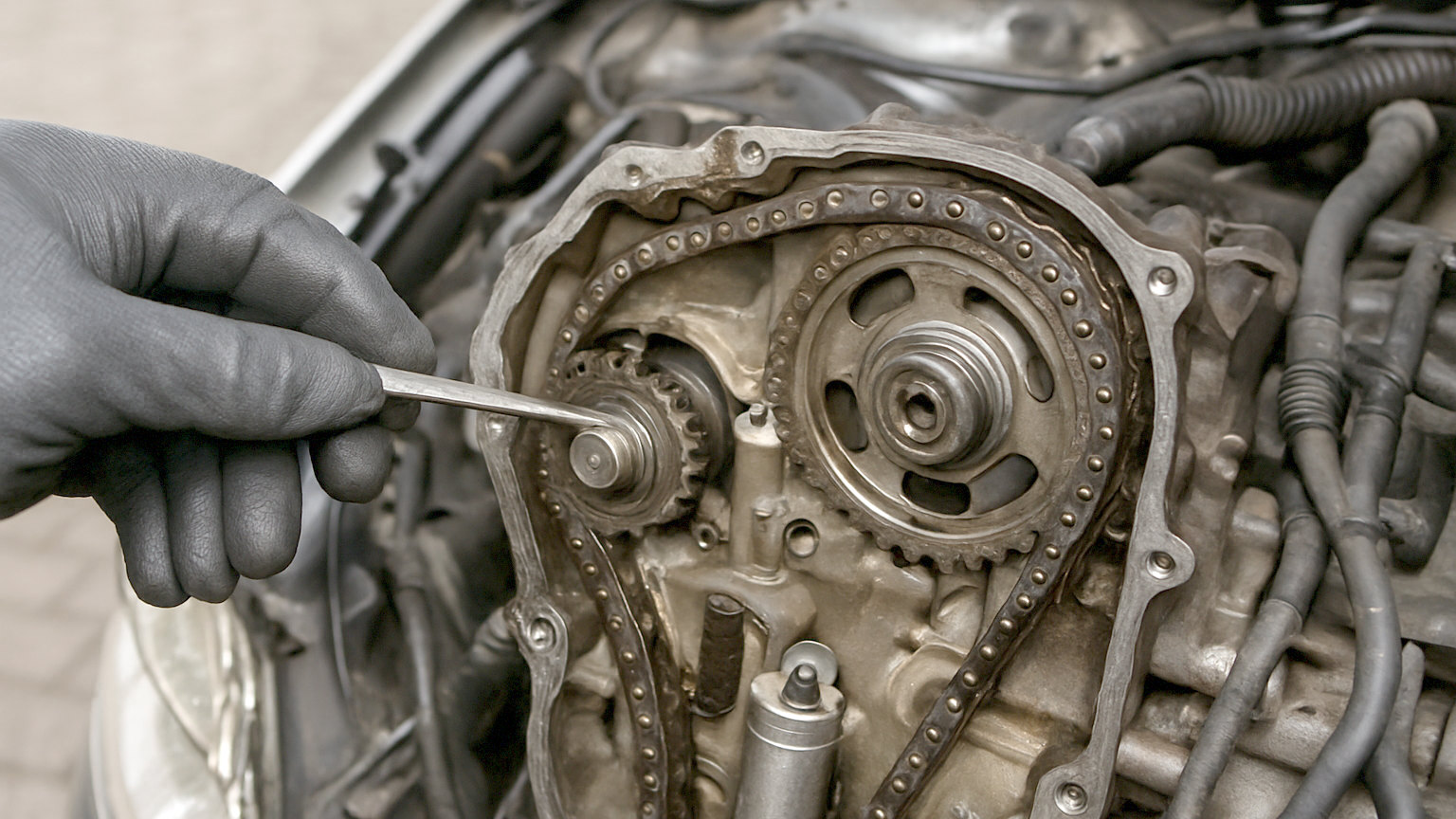
A rattle lasting one to three seconds after a cold start, which then disappears completely and never returns until the car has stood overnight, is easy to dismiss. It is also one of the noises most worth paying attention to, because the leading cause is a timing chain tensioner that is losing its ability to hold tension, and the eventual consequences of ignoring that are among the most expensive an engine can produce.
Why does the noise only happen at startup?
When an engine is switched off, oil gradually drains back down into the sump, leaving some components without pressure until the pump refills the galleries. On a healthy engine that takes a fraction of a second. On an engine where a tensioner relies on oil pressure to hold a chain tight, or where a lifter has bled down overnight, there is a brief window at every cold start where the part is running dry and slack. That window is exactly as long as the rattle.
What does a timing chain rattle sound like?
A dry, metallic clattering from the front or side of the engine, often described as sounding like a handful of gravel in a tin can, lasting perhaps two seconds and stopping abruptly rather than fading. It comes from the end of the engine where the chain runs rather than the middle. It is usually worse after the car has stood for days, better after a short stop, and it tends to get slightly longer over months as the tensioner and chain guides wear further.
Why does that matter so much?
A timing chain keeps the crankshaft and camshafts synchronised so that valves open and close at the right moment relative to the pistons. As the chain stretches and the plastic guides wear, the timing drifts, which shows up as poor running, warning lights and reduced economy. If the chain jumps a tooth or breaks on an interference engine, the pistons meet the valves and the damage is severe enough that a replacement engine is often cheaper than repair. The rattle is a warning delivered a long time in advance.
Could it be something less serious?
It could. Hydraulic lifters that bleed down overnight produce a similar short-lived clatter, though usually lighter and from the top of the engine rather than the end, and they frequently respond to an oil and filter change. A loose heat shield can rattle at the vibration frequencies present at low idle and stop once the engine speed rises. A worn auxiliary belt tensioner can also chatter on startup. None of these will destroy an engine, which is precisely why identifying the source properly matters.
Does oil have anything to do with it?
A great deal. Timing chain wear is strongly linked to oil condition, because a chain is lubricated by oil under pressure and the tensioner is operated by it. Extended service intervals, missed changes, low levels and the wrong viscosity all accelerate the wear and prolong the dry period at startup. Some engines with a known reputation for chain problems are considerably better behaved on a shorter oil change interval than the manufacturer originally specified.
What should you do about it?
Check the oil level and the service history first, and if the oil is old, change it and see whether the noise reduces. Then have it listened to properly by someone who can distinguish a chain from a lifter, because guessing wrong in either direction is costly. Many engines with chain problems have well documented histories, so the make, model and engine code will often tell a specialist immediately whether this is a known pattern. What is not sensible is waiting for the noise to get longer, because the tensioner does not recover on its own.
If the car is otherwise sound and you intend to keep it, treating a short startup rattle as a booking rather than a curiosity is one of the better decisions available to an owner, since the same job done after a chain has jumped costs several times as much.


