
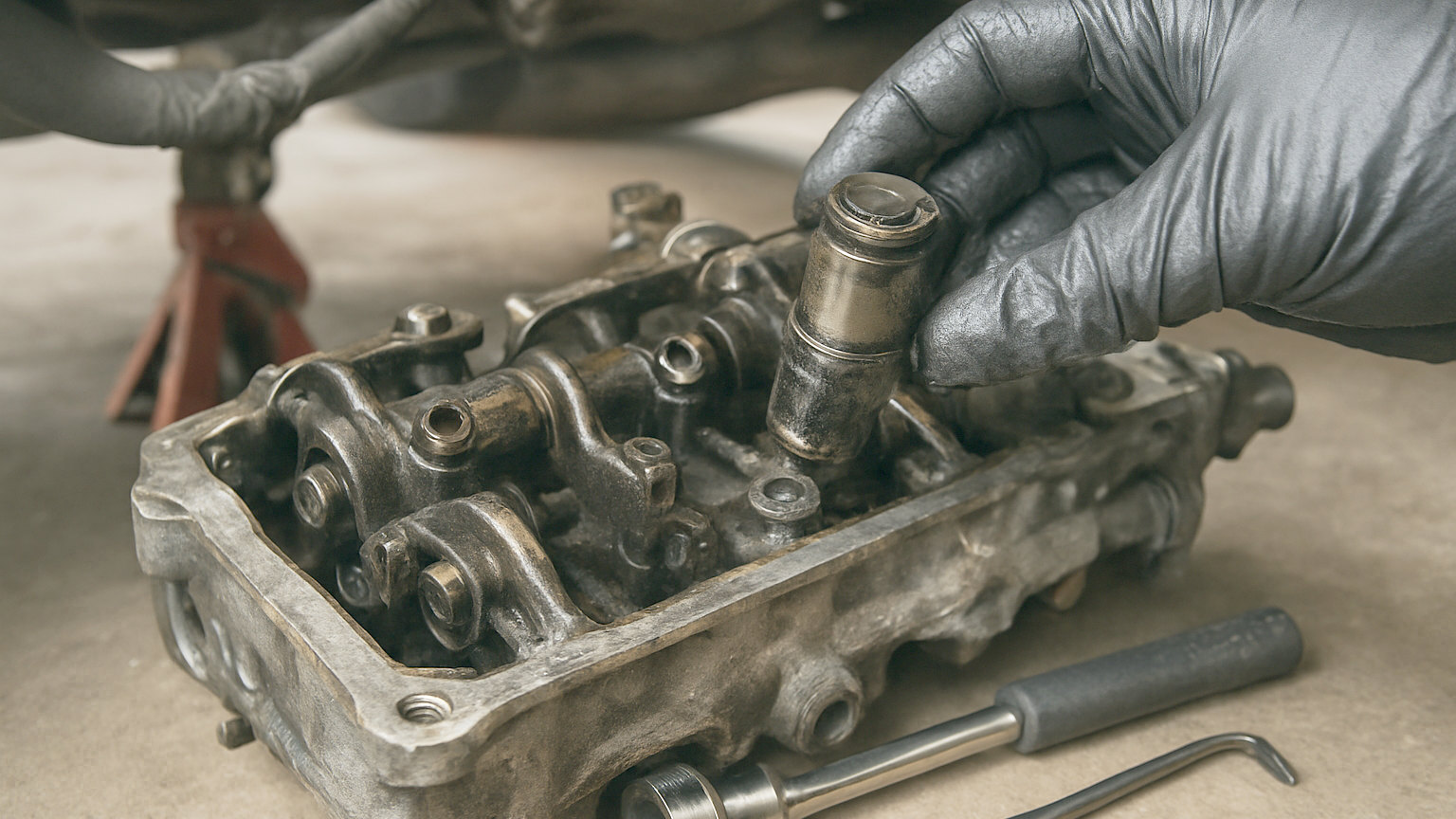
Hydraulic lifters, often called tappets, sit between the camshaft and the valves and use oil pressure to take up clearance automatically. When one stops filling correctly, a gap opens and the valve train ticks. The frustrating part for owners is that the same symptom can be cured by a forty pound oil change or require several hundred pounds of labour, and telling which in advance is not always possible.
What does the noise sound like?
A light, sharp, rhythmic tick from the top of the engine, running at half engine speed because the camshaft turns at half crankshaft speed. It is usually loudest immediately after a cold start and often reduces within thirty seconds as oil pressure builds. A single failed lifter is louder and more distinct than the general background noise of the valve train, and it typically comes from one identifiable point along the cylinder head rather than being spread out.
Why does oil matter so much?
A lifter is essentially a small hydraulic ram fed by engine oil, so anything wrong with the oil affects it directly. A level below minimum reduces pressure. Oil that is well past its change interval carries deposits that block the tiny feed holes. Oil that is too thick takes longer to reach the top of the engine on a cold start. Oil that is too thin may not maintain pressure at idle when hot. Getting the grade right for the engine and the season is not a detail here, it is the whole mechanism.
Will an oil change fix it?
Often enough to be worth trying first. A fresh change with the correct viscosity, ideally a good quality oil, cures a meaningful proportion of lifter noise, particularly where the previous oil was overdue. It may take a hundred miles or so for the noise to fade as deposits clear. Where the tick has been present for a long time or the lifter has worn mechanically rather than simply clogged, it will make no difference, and that is itself a useful diagnostic result.
Are engine flushes a good idea?
Opinions divide sharply. A gentle flush run for a short period before draining can dissolve deposits and free a sticking lifter, and there are cars where it clearly works. On a high mileage engine with heavy sludge, an aggressive flush can dislodge deposits that then block an oil pickup or a narrow gallery, which creates a far worse problem than the tick. If the engine has an unknown or poor service history, the safer approach is two short-interval oil changes rather than a strong chemical flush.
What does replacement involve?
Removing the rocker cover and, depending on the design, the camshafts or rocker assembly to access the lifters. The parts themselves are not expensive individually, and lifters are usually replaced as a set rather than singly because the others will be of a similar age. The cost is almost entirely labour and varies enormously with engine layout, from a few hours on an accessible four cylinder to a considerably larger job on a V engine where the inlet manifold must come off first.
Can you just live with it?
Many people do, and a light tick on an older engine with no other symptoms is not going to destroy anything quickly. The reasons not to ignore it indefinitely are that a lifter which has collapsed completely stops opening its valve properly, which causes a misfire and loss of power, and that persistent ticking sometimes indicates worn camshaft lobes underneath. Have it listened to properly, try the oil change, and make the decision from there rather than assuming either the best or the worst.
If you do decide to live with it, keep the oil level topped up and the change interval short, and note whether the tick is getting longer or louder over the months. A noise that is stable is a very different proposition from one that is slowly winning.


