
Most noises a car makes are an invitation to book an appointment rather than a reason to abandon the journey. A small number are different, and the distinction is worth knowing in advance, because it is a decision people usually have to make at the side of a road with limited information. The general principle is that noises accompanied by warning lights, loss of power or smoke belong in the stop category, and noises that have been unchanged for weeks usually do not.
Which noise is the clearest stop signal?
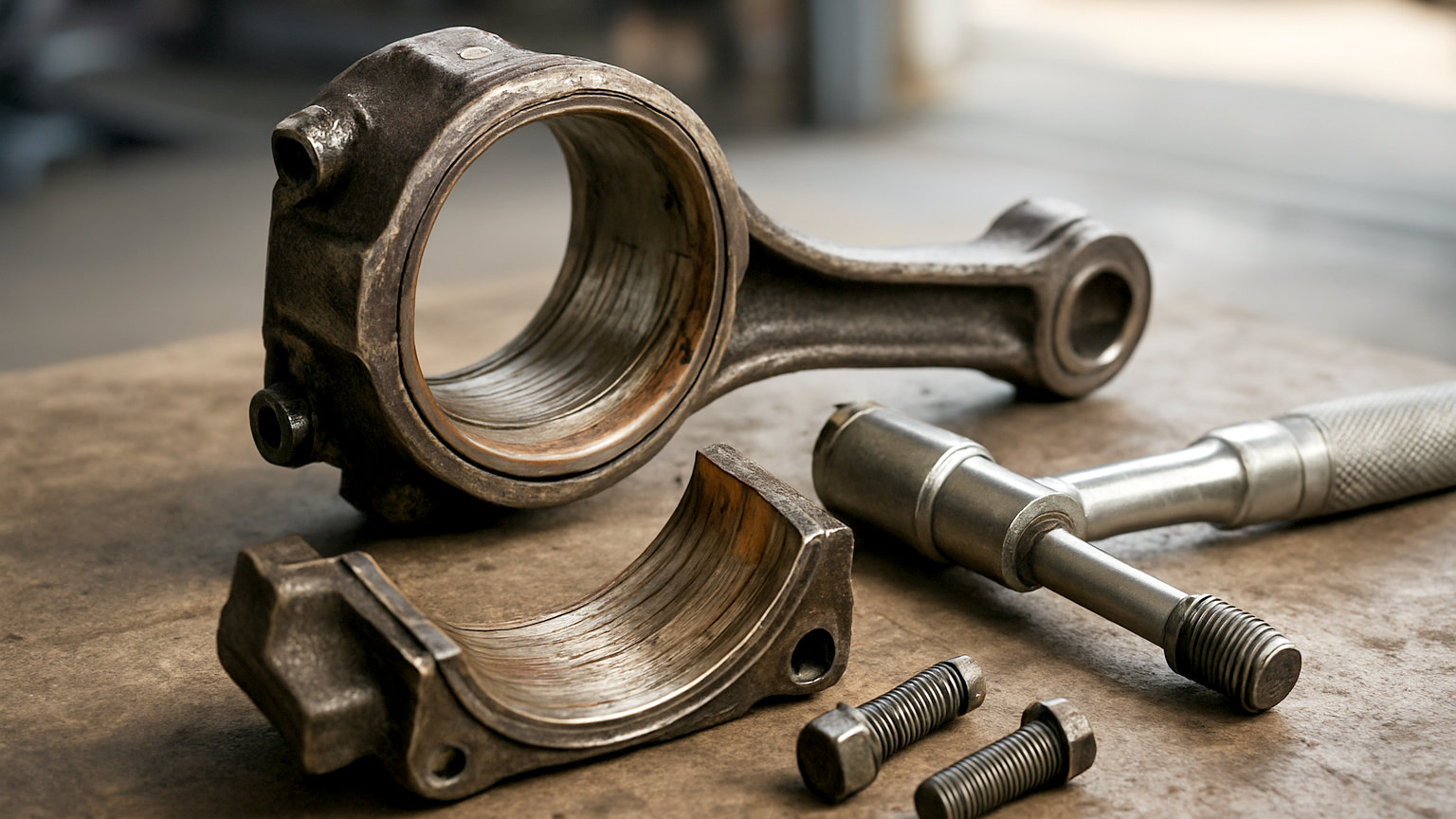
A deep rhythmic knocking from low in the engine that keeps time with engine speed. This is the sound of a bearing that has lost its oil film, and every further revolution enlarges the damage and circulates metal through the rest of the engine. Unlike most faults it deteriorates by the mile rather than by the month. If this noise is accompanied by an oil pressure warning light, the engine should be switched off immediately rather than driven to the next junction.
Why does the oil pressure light change everything?
Because it is not a level warning, it is a pressure warning, and it means oil is no longer reaching the bearings at the pressure required to keep the metal surfaces apart. An engine can destroy itself in under a minute in that condition. Any noise at all in the company of a red oil light means stop, switch off and check the level, and if the level is correct do not restart the engine to see whether the light stays on.
What about noises with the temperature gauge rising?
Also a stop. Rattling, knocking or hissing alongside a high temperature reading suggests either the engine is detonating because it is too hot or the cooling system is releasing pressure. Continuing risks warping a cylinder head, and heat damage happens far faster than most drivers expect. Pull over, switch off, and let it cool completely before opening anything, because a pressurised cooling system releases scalding coolant when opened hot.
Which noises justify a slow careful drive home?
A squealing belt with no warning lights, a light tick from the top of the engine that has been there for weeks, a rattle from a loose heat shield that comes and goes with engine speed, and a slight whine from the power steering pump. None of these will destroy the engine in the next twenty miles. It is still worth cutting the journey short where possible, and paying attention to whether the noise changes as you go, since a belt that is squealing can become a belt that has shredded.
What about a sudden change in noise?
Any noise that appears abruptly during a journey deserves more caution than one that arrived gradually, simply because something has just happened rather than slowly worn out. A bang followed by a change in engine note, a sudden loss of power with a new noise, or a rattle that starts and immediately gets louder are all reasons to stop and look rather than continue and hope. Steam, smoke, or a smell of burning make the decision for you.
How should you stop safely?
Signal early, use a lay-by, service area or side road rather than the hard shoulder if there is any choice, and on a motorway get behind the barrier once out of the car. Switch the engine off rather than leaving it idling while you think, because idling is still running. Then decide calmly whether recovery is needed, and remember that a recovery call costs a small fraction of an engine and considerably less than the difference between a repair and a replacement.
If you are genuinely unsure which category a noise falls into, treat it as the more serious one. The cost of being wrong in that direction is an inconvenient afternoon, and the cost of being wrong in the other is an engine.


