
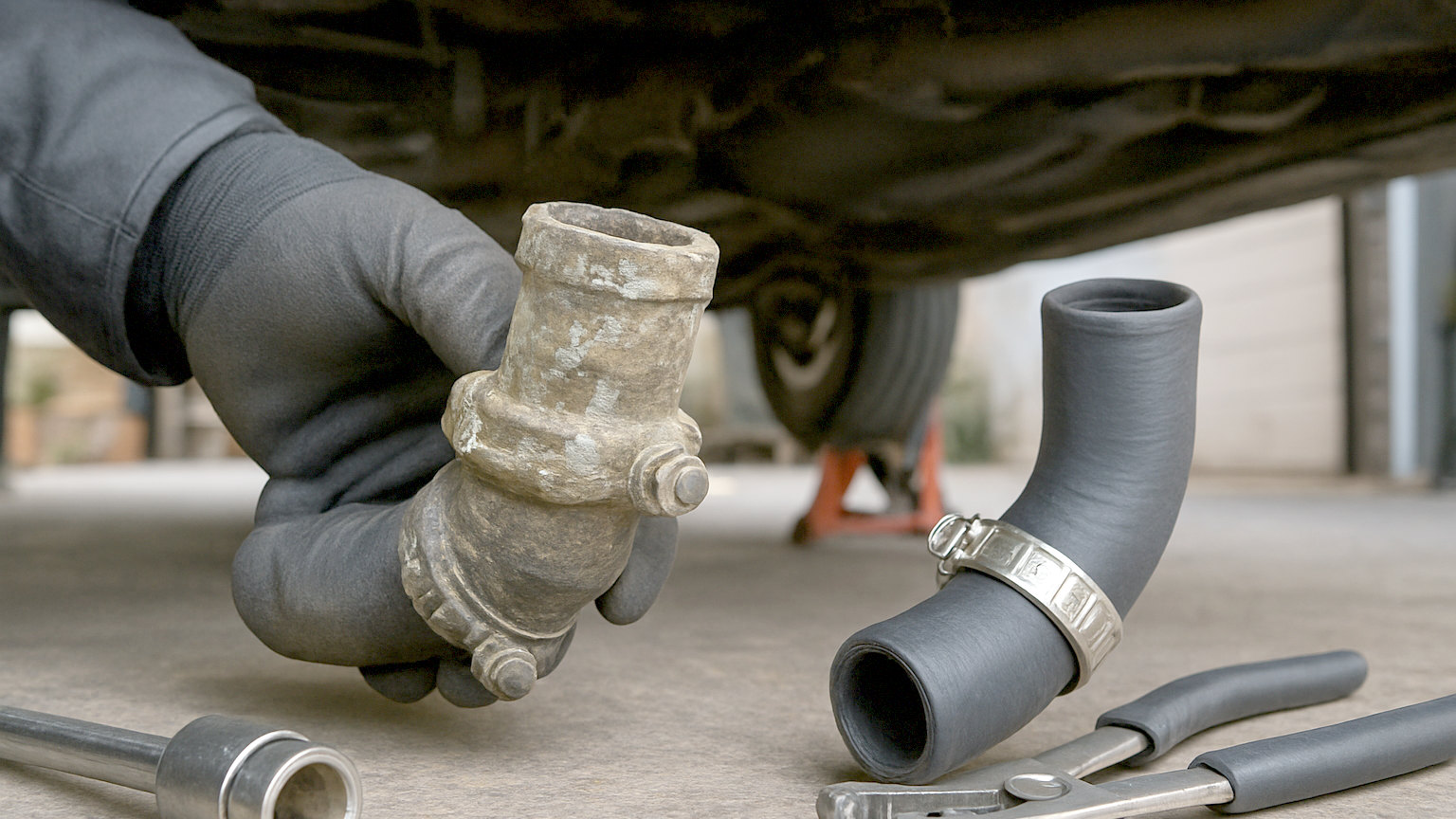
Hissing is the sound of gas moving through a gap it should not be moving through, which means something is either leaking out under pressure or being drawn in under vacuum. Where the noise comes from and when it appears determine which, and the difference matters, because an intake leak makes an engine idle badly while a hiss from a hot cooling system is a reason to stop and switch off.
What is a vacuum leak and why does it hiss?
A running petrol engine creates significant vacuum in the inlet manifold, and any crack, split hose or failed gasket downstream of the throttle allows air to be drawn in. Air passing through a small gap at that pressure difference makes a distinct hiss, most audible at idle and often disappearing under load as the vacuum falls. Because that air has bypassed the airflow sensor, the engine management does not know about it, and the mixture goes lean.
What symptoms come with an intake leak?
A rough or hunting idle, an idle speed that is higher than normal, stalling when coming to a stop, hesitation on light throttle and often an engine management light with lean running codes stored. Perished rubber breather hoses are the classic cause on older cars, along with inlet manifold gaskets, brittle vacuum lines and a split intake pipe between the airflow sensor and the throttle body. Many of these are visible once you look, since the rubber cracks along the bends.
How can you find where it is coming from?
With the engine idling, listen carefully around the intake, following each hose to both ends and squeezing them gently to feel for cracks that open under pressure. Take great care around belts and the fan. Garages use a smoke machine, which fills the intake with harmless vapour under slight pressure and shows exactly where it escapes, and this is by far the most reliable method for finding small leaks that are invisible and inaudible over engine noise.
What about turbocharged cars?
On a turbo engine the intake after the compressor is pressurised rather than under vacuum, so a leak there hisses under acceleration rather than at idle. The symptoms are loss of power, a car that feels flat and may enter limp mode, and sometimes a whooshing sound as boost escapes. Split intercooler hoses and loose clamps are the common causes, and they are usually straightforward to find because the affected pipework is often oily where the leak has been blowing.
Could it be the brake servo?
Yes, and it is worth identifying because it affects braking. The servo uses engine vacuum to assist the brake pedal, and a failed diaphragm or a perished servo hose hisses, usually most noticeably when the pedal is pressed. The associated symptom is a brake pedal that feels harder than it should and requires more effort, along with a rough idle as the leak upsets the mixture. Anything affecting the brakes should be treated as urgent rather than as an idle quality complaint.
When does hissing mean stop the car?
When it comes from the cooling system. A hiss from a hot engine accompanied by steam, a sweet smell or a rising temperature gauge is pressurised coolant escaping, and that is a reason to stop safely, switch off and let everything cool before opening anything at all. The same applies to a hissing that starts suddenly during a drive with any warning light. Intake leaks are annoying and worth fixing at your convenience; coolant escaping under pressure is neither of those things.
What should you check first?
Start with the temperature gauge and the coolant level, because that answers the urgent question in seconds. If both are normal, look at the rubber hoses around the intake and the breather system for splits and perished ends, and note whether the idle is rough or unstable. That combination separates a cheap hose replacement from something that needs a smoke test, and it costs nothing but a few minutes with the bonnet up.


