
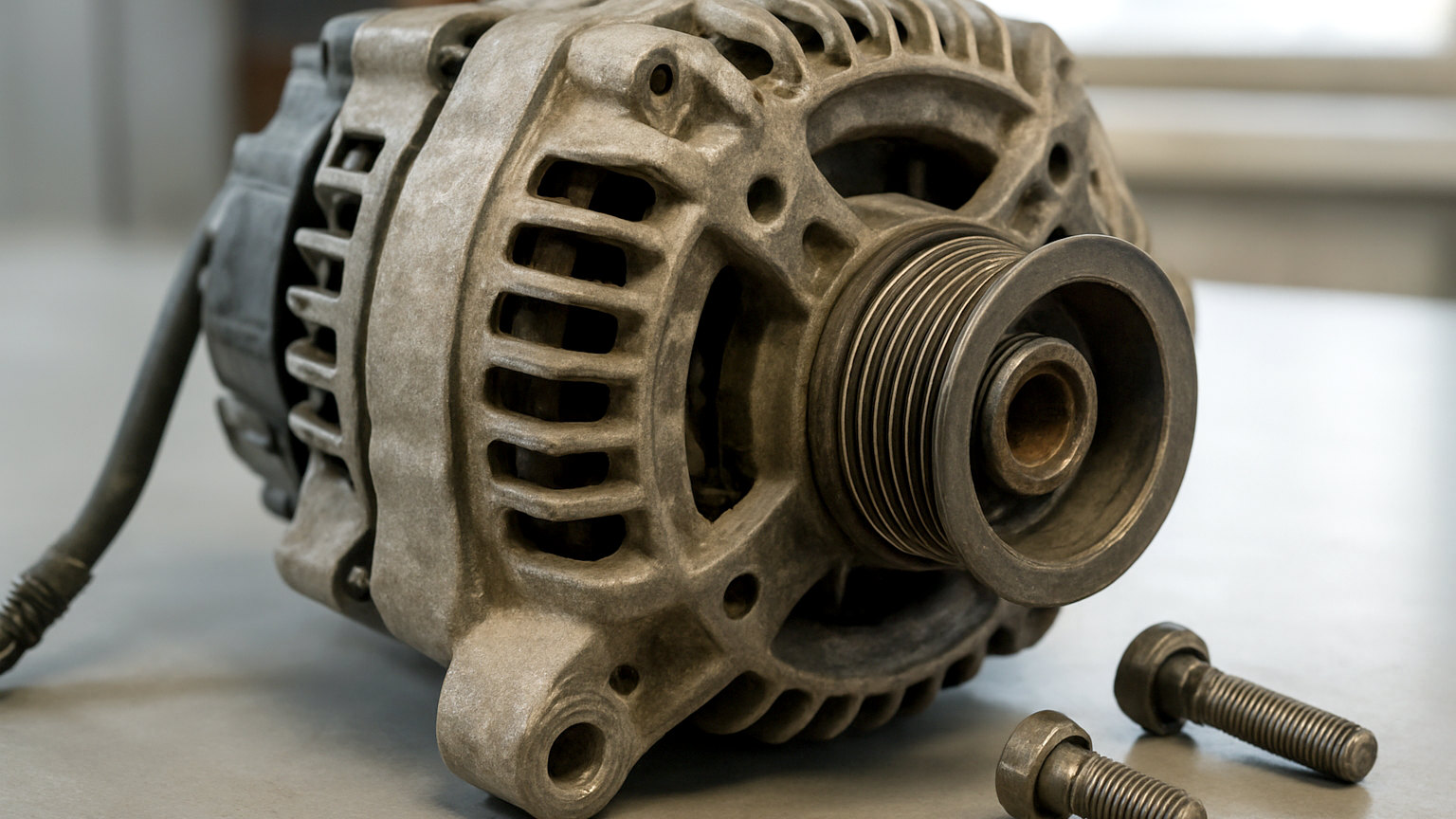
A whine that rises and falls precisely with engine speed, regardless of what gear you are in or whether the car is moving at all, is coming from something driven directly by the engine. That is a genuinely useful piece of information, because it immediately rules out the gearbox, the differential and the wheel bearings, all of which follow road speed instead. What remains is a short list of spinning components at the front of the engine, plus one or two others.
How do you confirm it follows engine speed?
Sit stationary in neutral with the handbrake on and raise the revs gently. If the whine rises with the needle, it is engine driven. If the noise only appears while moving and tracks road speed instead, the fault is in the transmission or the wheels and belongs in a different category entirely. This one test takes thirty seconds and prevents an enormous amount of wasted diagnosis, so it is always worth doing before anything else.
Which components typically whine?
The alternator is the most common, as its bearings wear and produce a rising whine or growl, sometimes accompanied by a battery warning light or dimming headlights. The power steering pump whines when the fluid is low or aerated, and characteristically gets much louder when the steering is turned towards full lock. The water pump bearing whines and is often accompanied by coolant staining around the pulley. Idler and tensioner pulleys have bearings too and fail in exactly the same way.
How can you narrow it down without tools?
Load each component in turn and listen. Switch on the headlights, heated rear screen and blower to load the alternator. Turn the steering slowly from lock to lock while stationary to load the power steering. Switch the air conditioning on and off to engage the compressor. A whine that changes noticeably when one of these is loaded has identified itself. A mechanic will confirm it with a stethoscope, or by removing the auxiliary belt briefly and running the engine for a few seconds, which silences everything the belt drives at once.
What about a turbocharger?
Turbos whistle by design, and a faint rising whistle under acceleration is entirely normal on many cars. It becomes a concern when it turns into a harsh siren-like screech, when it is accompanied by loss of power, blue smoke or oil consumption, or when it changes noticeably over a short period. A turbo whine that has clearly got worse deserves prompt attention, because a failing turbo can send its own debris into the engine and turn one repair into two.
Could it be the power steering fluid rather than the pump?
Very often, and it is the cheapest possibility on the list. A low fluid level lets the pump draw in air, and aerated fluid whines loudly, foams in the reservoir and makes the steering feel heavier or grabby. Checking the level takes a minute, and if it is low the important question is where the fluid went, since these systems are sealed. A whine that disappears entirely after topping up has confirmed the diagnosis and revealed a leak to be found.
How urgent is it?
It depends entirely on which component is responsible. A whining alternator will eventually stop charging and leave you stranded, and its bearing can seize and shred the belt. A whining water pump can fail and cause immediate overheating. A whining power steering pump is inconvenient rather than dangerous, though heavy steering at low speed is unpleasant. None of them improve on their own, and because most of these parts live on the same belt, having the whole front of the engine assessed at once usually saves a second labour charge later.
Record a short video with the engine idling and again with the revs raised, since a whine that is obvious on the driveway has a habit of hiding when the car is in a busy workshop with three other engines running.


