
Ticking is the most common engine noise complaint and one of the least alarming in most cases, but it covers several different faults with very different consequences. Almost all of them originate in the top of the engine rather than the bottom, which is already good news, since top end repairs are generally far cheaper than anything involving the crankshaft. The trick is separating a noise that needs an oil change from one that needs a cylinder head off.
Why do hydraulic lifters tick?
Most modern engines use hydraulic lifters that take up valve clearance automatically using oil pressure. When one fails to fill properly, a small gap opens up and the valve train makes a light rhythmic tick at half engine speed. The usual causes are low oil level, oil that is far past its change interval, oil of the wrong viscosity, or a lifter that has become clogged with deposits. Many of these tick loudly for the first few seconds after a cold start and then quieten as pressure builds.
Because the fault is so often oil-related, a fresh oil and filter change with the correct grade is a reasonable first step and cures a good proportion of cases. A lifter that remains noisy afterwards has usually worn mechanically and will need replacing, which involves removing the camshaft or rocker assembly.
How does an exhaust leak imitate a tick?
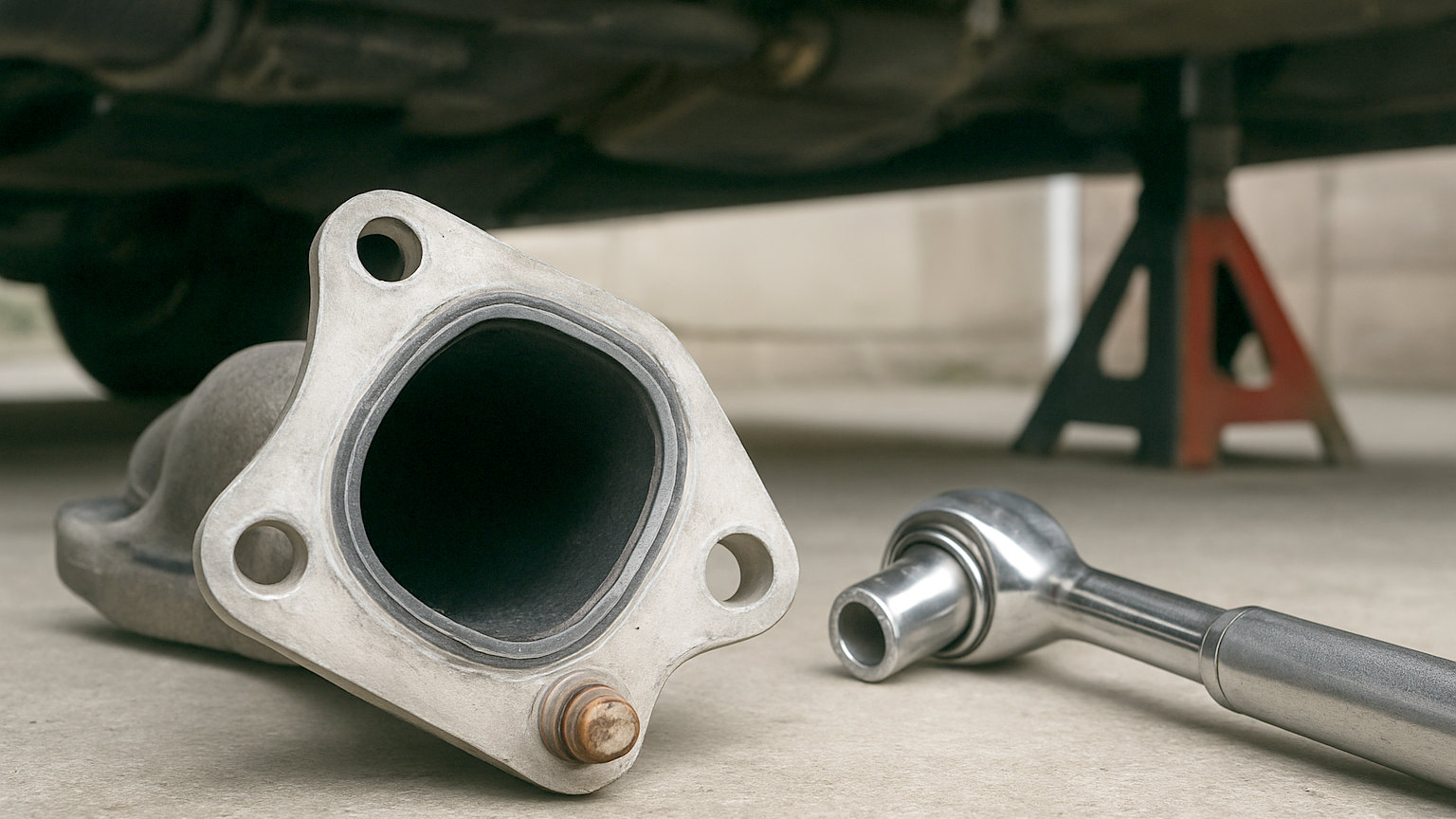
Extremely convincingly, and this is the most commonly misdiagnosed engine noise there is. A crack in the exhaust manifold or a failed manifold gasket releases a small pulse of pressure on each exhaust stroke, producing a sharp tick that rises with engine speed exactly as a valve train noise would. The distinguishing signs are that it is loudest when the engine is cold and quietens as the metal expands and closes the gap, that it is often audible from outside the car near the front wheel arch, and that there may be a faint smell of exhaust in the cabin.
What about injectors?
Diesel injectors tick audibly as part of normal operation, and direct injection petrol engines do the same, so a rhythmic chattering from the top of the engine is not automatically a fault. It becomes a fault when one injector is noticeably louder than the others, when it is accompanied by rough running or a misfire, or when the noise has clearly changed in recent weeks. A mechanic can isolate this by disabling injectors one at a time and listening for the noise to disappear.
Do valve clearances still need adjusting?
On engines with solid rather than hydraulic lifters, yes, and the clearances close up or open out over tens of thousands of miles. A tick that has appeared gradually on an engine with a published valve clearance interval, particularly an older or performance engine, is often nothing more than a service item that is overdue. Checking the handbook for whether the engine has a shim and bucket or hydraulic arrangement saves a great deal of speculation.
When is a ticking noise serious?
When it is accompanied by low oil pressure, when it comes with a misfire or loss of power, when it gets steadily worse over days rather than months, or when it is deep and heavy rather than light and sharp. A tick that becomes a knock as the engine warms has probably never been a tick. Anything with a warning light attached, particularly the oil pressure light, should be treated as a reason to stop rather than a reason to book an appointment for next week.
What is the sensible first step?
Check the oil level and condition, and note when it was last changed. Then listen carefully to when the noise occurs: cold only, warm only, at idle, or rising with revs. Those observations plus a fresh oil change resolve a good proportion of ticking complaints and, where they do not, they give a garage a far better starting point than an appointment booked for a car that makes a noise.


