
A noise that is obvious for the first few minutes and then fades away as the engine reaches temperature is following a very specific rule: metal expands as it heats, and clearances close. That single fact explains almost every cold-only engine noise, and it narrows the possibilities to a handful of components where a small gap exists when cold and disappears when hot. Some are harmless and some are worth attention.
Why does temperature change the noise at all?
Different components in an engine are made of different metals, and aluminium expands roughly twice as much as steel for the same temperature rise. An aluminium piston in an iron bore, or an aluminium head against a steel manifold, has meaningfully more clearance at five degrees than at ninety. Anywhere that clearance allows movement, there is potential for a tap or a tick, and as the engine reaches operating temperature the gap closes and the noise stops.
What is piston slap?
Piston slap is the sound of a piston rocking slightly in its bore and contacting the cylinder wall as it changes direction. It produces a hollow, muffled knock, usually most obvious in the first minute or two of a cold start, and it fades as the piston expands. It is common on higher mileage engines and on certain designs known for it from new. On its own, with no oil consumption, no loss of power and no warning lights, it is generally tolerated rather than repaired, since the cure is a rebuild.
How does an exhaust manifold leak fit the pattern?
Almost perfectly, and it is one of the most common causes of this exact complaint. A cracked manifold or a failed gasket leaves a small gap when cold that seals up as the metal expands, so the sharp ticking present for the first few minutes vanishes entirely once warm. Listen from outside the car with the bonnet up during a cold start, since a manifold leak is usually much more obvious from the front wheel arch than from the driver seat, and check for a faint exhaust smell in the cabin.
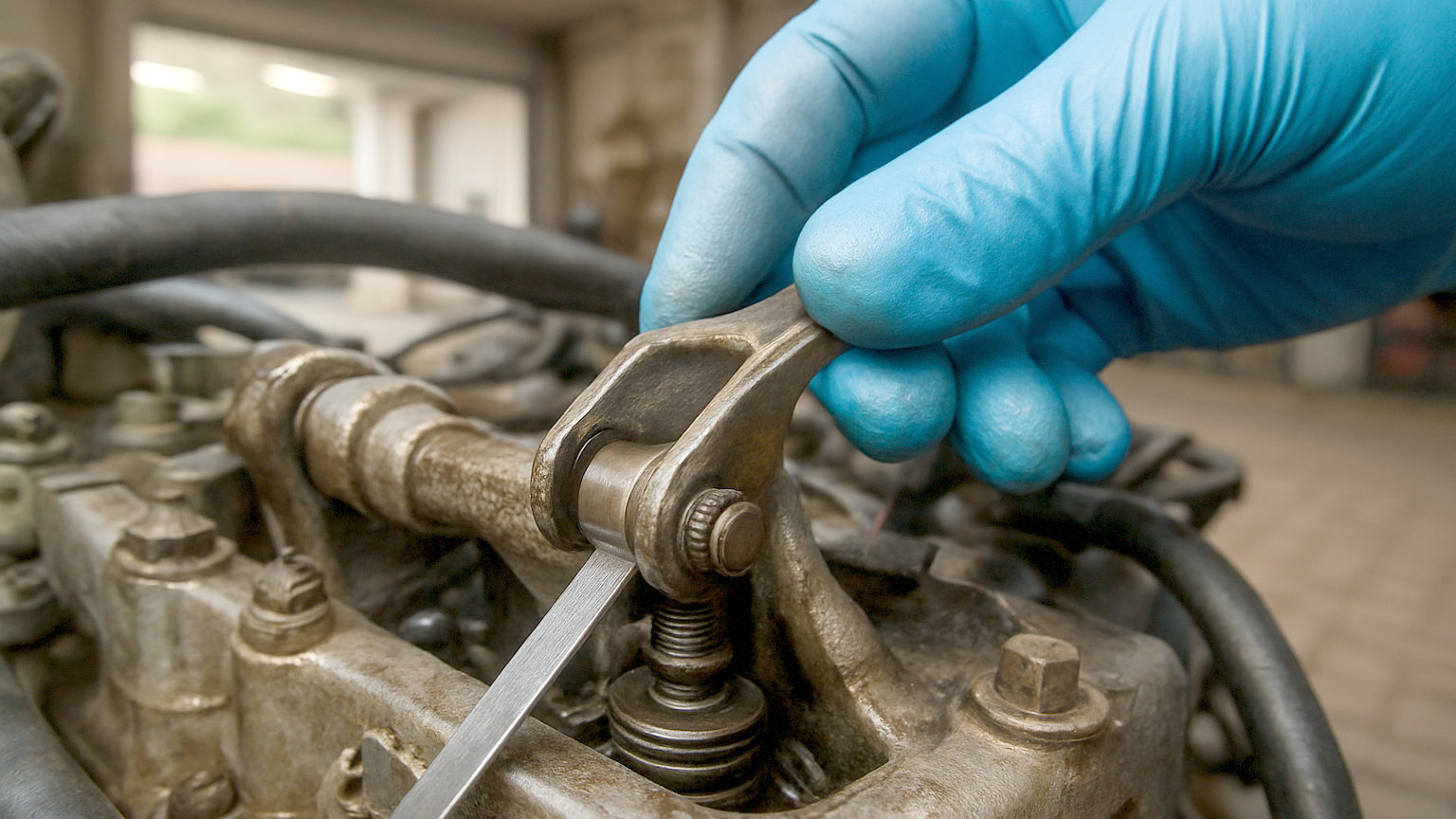
Why do hydraulic lifters tick when cold?
Oil drains out of the lifters overnight and they need pressure to refill. Until they do, there is a small gap in the valve train and each valve is struck rather than lifted smoothly. A few seconds of ticking on a cold start is normal on many engines. Ticking that lasts a minute or more, or that has clearly got longer over recent months, suggests the lifters are worn or the oil is overdue, and a change with the correct viscosity is a sensible first response.
Which cold noises should worry you?
Anything that lasts longer than it used to, anything that has changed character, and anything accompanied by an oil pressure warning. A metallic clatter for two or three seconds on cold start that stops abruptly is more likely a timing chain tensioner than a lifter, and that deserves proper investigation because the consequences of chain failure are severe. A deep knock that is present when cold and remains when warm is a bottom end noise and is a different problem entirely.
Does anything make it better?
Fresh oil of the correct grade helps genuinely, because thinner cold oil reaches the top of the engine faster and old degraded oil does not. Avoiding heavy throttle in the first couple of minutes reduces the loads applied while clearances are still open and is good practice regardless. What does not help is running a heavier oil to mask a noise, since that slows cold circulation and makes the underlying wear worse rather than better.
The one habit worth adopting is listening deliberately for the first minute of every cold start rather than switching the radio on immediately. A noise that is getting gradually longer is easy to miss when it is compared only with yesterday, and much harder to miss when you have been paying attention all winter.


