
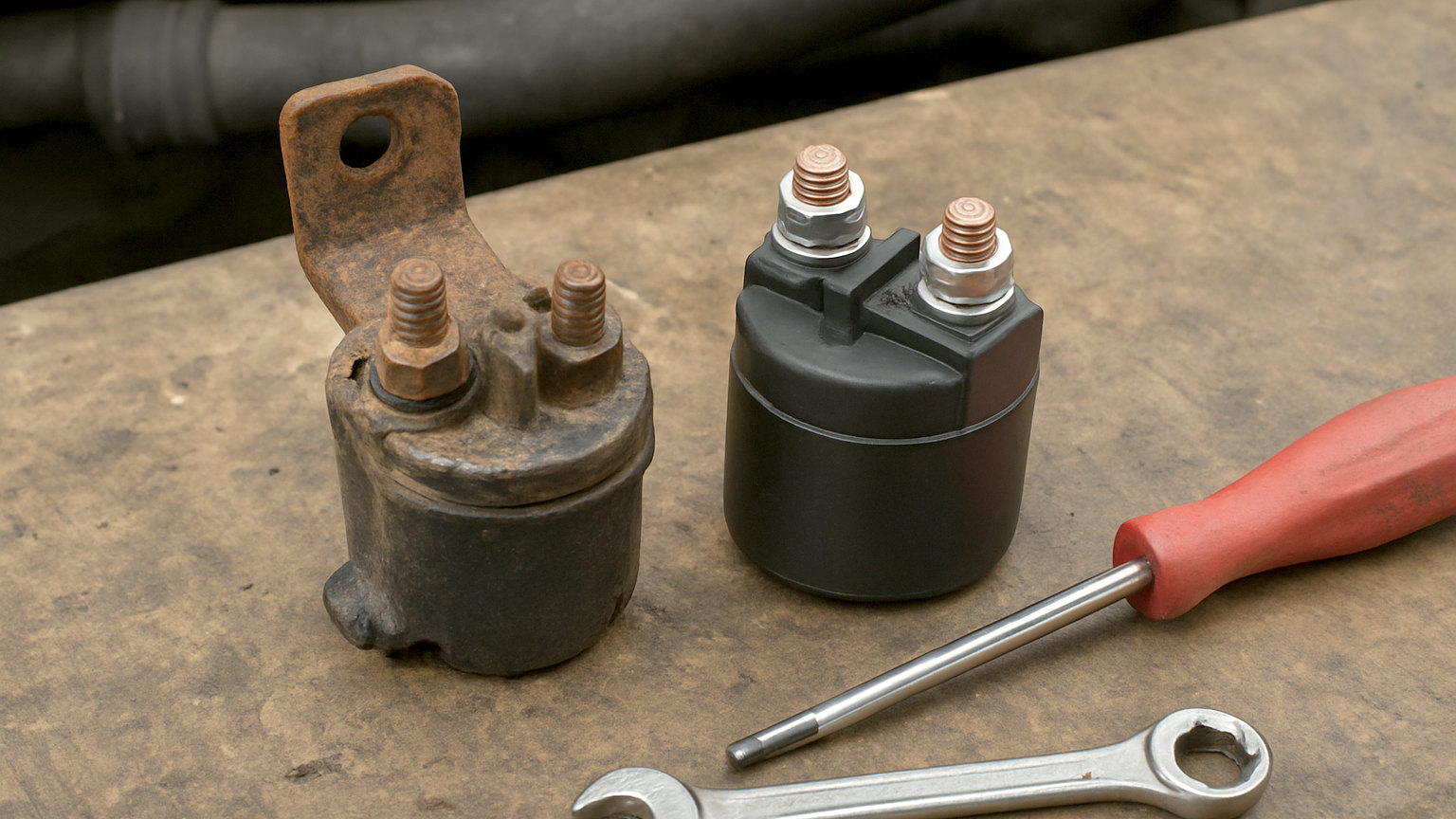
A car with bright dashboard lights and absolutely no response to the key is doing something quite specific. Power is clearly reaching the vehicle, so the battery is at least partly healthy, yet the request to start is not arriving where it needs to. Between your hand and the starter motor sits a chain of switches and permissions, all of which must be satisfied, and any one of them can quietly refuse.
What permissions does a car check before cranking?
Modern cars will not turn the starter unless several conditions are met at once. The key or fob must be recognised by the immobiliser. On a manual, the clutch pedal usually has to be fully depressed. On an automatic, the selector must be in park or neutral. The ignition switch or start button circuit must actually complete. If any of those is not satisfied, you get the same result as a total electrical failure while the dashboard sits there looking perfectly healthy.
How do you spot an immobiliser problem?
Look for a symbol shaped like a key, a car with a padlock, or a small red light that flashes rather than glowing steadily. A steady light during starting is often normal, while a rapid flash frequently indicates that the key has not been recognised. Test the spare key immediately, because it is free and it either solves the problem or eliminates a whole branch of possibilities. Fob batteries die, transponder chips fail, and keys that have been dropped repeatedly do eventually stop communicating.
Can the gear selector or clutch pedal be the cause?
Frequently, and it is the cheapest fault in this article. Automatics use an inhibitor switch that confirms the car is in park or neutral, and these wear with age, particularly on cars that have covered high mileage. If your automatic will not start in park, move the selector to neutral and try again, and if it starts there the switch is the fault rather than anything expensive. On manuals, the clutch switch behind the pedal can fail or move out of adjustment, so pressing the pedal firmly to the floor is always worth trying.
What does a failing ignition switch feel like?
Ignition switches wear internally and often give warning through inconsistency. The car may start if the key is held in a particular position, or if it is wiggled slightly, or it may work every time except when the weather is damp. Since the switch has to power the dashboard and then complete a further circuit for the starter, a partially failed one can light everything up and do nothing more. On push button cars, the equivalent faults are the brake pedal switch and the button itself.
Does this rule the battery out completely?
Not entirely. A battery can have enough charge to run the dashboard while being incapable of the huge current the starter demands, though that usually produces a click rather than pure silence. Since terminal corrosion and a poor earth strap can mimic all of these faults, cleaning and tightening the connections remains worth doing before anything is diagnosed as electrical. It takes ten minutes and rules out the most common cause of confusing symptoms.
What should you try in order?
Try the spare key, press the clutch fully or shift to neutral, look at the dashboard for a flashing security symbol, and check the battery terminals and earth straps. Those four steps take fifteen minutes and account for the majority of cars that turn a key and do nothing. If all of them come back clear, the fault is in the starter circuit wiring or the switch itself, which needs a meter and a wiring diagram rather than further guesswork.
It is worth writing down exactly what happens before you hand the car over, including whether the dashboard lights stay bright, whether any symbol flashes, and whether the spare key behaves differently. That description saves diagnostic time and diagnostic time is what you are paying for.


