
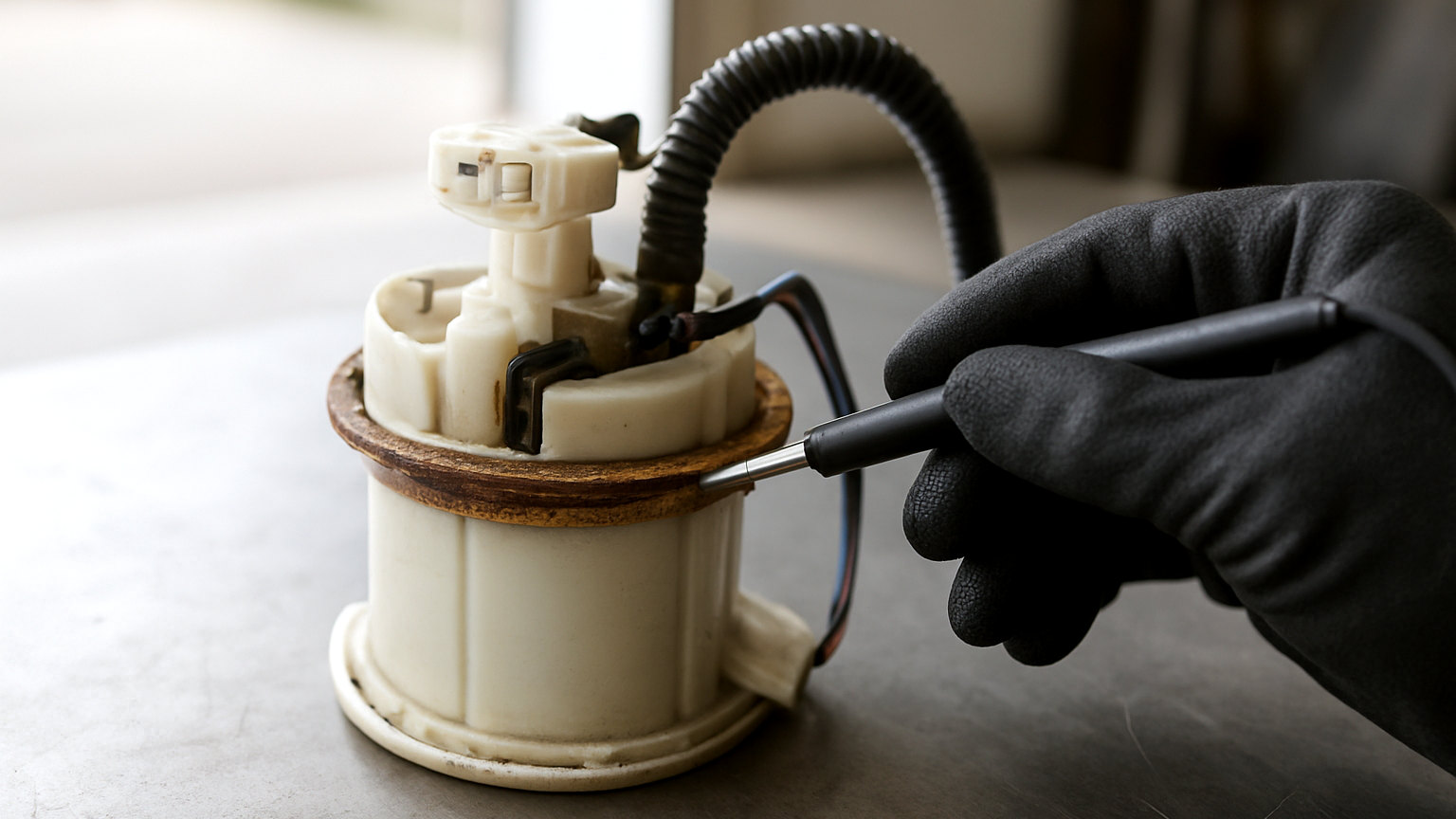
When an engine cranks strongly and never fires, fuel supply is one of the three things worth investigating, and it has a fingerprint that distinguishes it from ignition and sensor faults reasonably well. Fuel problems tend to give warning before they strand you, they behave differently under load than at idle, and they announce themselves through a sound most drivers have heard thousands of times without ever noticing it.
What is the priming sound and why does it matter?
Turn the ignition to the position just before cranking, with the radio off and the windows up, and listen towards the back of the car. A healthy fuel pump runs for two or three seconds to build pressure in the fuel rail, producing a soft electrical buzz. If that sound is missing entirely, either the pump has failed, the relay that switches it is not working, or the fuse feeding it has blown. Checking the relay and fuse first is sensible because both are cheap and easy to reach.
What warning signs come before a pump dies?
Pumps rarely stop without notice. In the weeks before, the car may hesitate or lose power when climbing a hill or overtaking, which is when fuel demand is highest. It may take longer to start than usual, particularly after standing. There may be a whining noise from the tank that is louder than it used to be. Running the tank persistently low makes all of this more likely, because the fuel surrounding the pump also cools it and a pump that regularly runs dry works considerably harder.
How does a blocked filter behave differently?
A filter blocks gradually, so the symptoms build over weeks or months rather than appearing overnight. It restricts flow most when demand is high, meaning the car pulls poorly under acceleration and may cut out on motorway inclines while idling perfectly happily. A completely blocked filter will prevent starting, but by that point there will usually have been a long history of hesitation. Filters are service items and a car that has never had one changed in a hundred thousand miles is overdue regardless.
What is different about diesel fuel systems?
Diesels are far less tolerant of air in the fuel system. A perished pipe, a cracked filter housing or a loose union will draw air in, and once that happens the system may not build enough pressure to start at all, even though nothing has actually failed. Running a diesel completely out of fuel does the same thing, which is why simply adding fuel and cranking often does not work and the system needs to be bled properly.
Could it be something much simpler?
Fuel gauge senders fail, and a car reading a quarter full can be genuinely empty. It is also worth thinking honestly about the last fill, because putting the wrong fuel in produces a car that either runs badly and stops or refuses to start at all. If a car was fine before a fuel stop and difficult afterwards, do not crank repeatedly, because circulating the wrong fuel through the system makes the eventual repair considerably more involved.
Which parts of this can you check yourself?
Listening for the prime, checking the fuel pump fuse and relay, and swapping the relay with an identical one elsewhere in the box are all reasonable driveway jobs. Anything involving pressure testing the fuel rail, opening the system or dropping the tank is not, because fuel systems on modern cars hold high pressure even when switched off and diesel common rail systems are dangerous to open casually. Identify the likely cause yourself, then let a garage confirm it with a gauge.
Reading fault codes first is also worth doing, since a stored code relating to fuel rail pressure narrows things considerably and costs nothing at most parts shops. Codes name a circuit rather than a broken component, so treat them as a direction to look in rather than a shopping list.


