
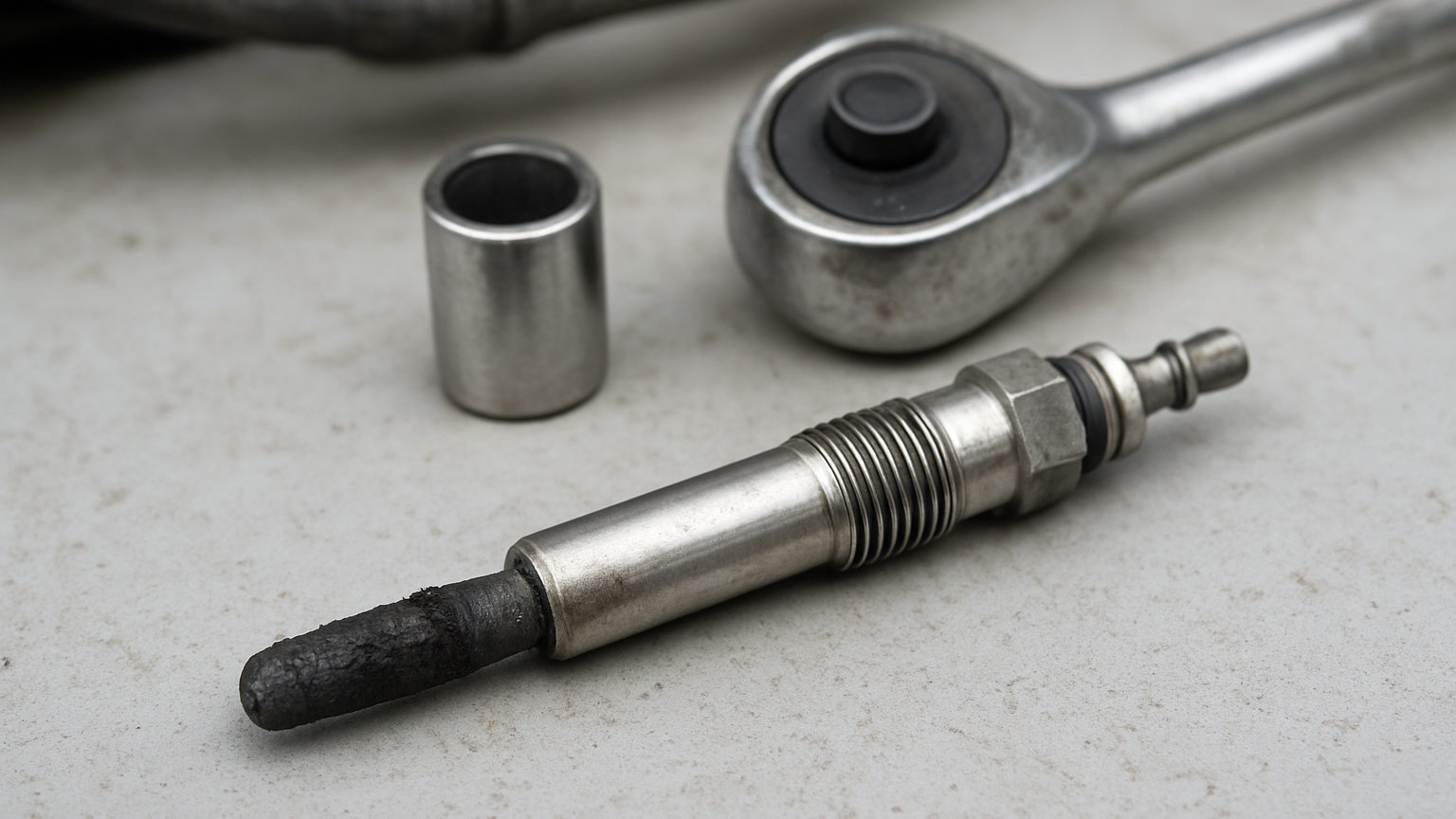
Diesel engines ignite fuel purely by compressing air until it becomes hot enough to do the job, with no spark plug involved anywhere in the process. That works beautifully once everything is warm and becomes marginal when the metal surrounding the combustion chamber is at freezing point, because too much of the heat of compression is absorbed by cold components. Glow plugs exist to solve that problem, and when they stop working the car develops a strictly seasonal personality.
What do glow plugs actually do?
A glow plug is a small electric heating element that projects into each combustion chamber and reaches a very high temperature within a few seconds. It preheats the air and the chamber walls so that the first compression stroke is hot enough to ignite the injected diesel. That is why the coil-shaped symbol appears on the dashboard when you switch the ignition on, and why waiting for it to go out before cranking genuinely matters on a cold morning rather than being a formality.
What are the symptoms of failed glow plugs?
The pattern is distinctive. The car starts perfectly in mild weather and refuses when it is cold, cranks strongly without catching, and produces large amounts of white smoke that is actually unburnt fuel rather than steam. If it does catch, it runs roughly for the first thirty seconds or so, misfiring on the cylinders whose plugs have failed, then smooths out as combustion heat warms everything up. Fuel economy may drop slightly and a warning light may flash, though many cars do not illuminate anything until several plugs have gone.
Because engines can usually start on the remaining working plugs, failure is gradual. One plug fails in the spring and nobody notices; a second fails in the summer; the car then refuses to start on the first frost of the year and it appears sudden. This is why testing them before winter is worthwhile on any older diesel.
How can you help it start in the meantime?
Cycling the ignition two or three times before cranking gives the surviving plugs a longer heating period, and it often makes the difference on a marginal morning. Switch everything electrical off so the battery can devote itself entirely to the starter, since diesels have higher compression and need more cranking effort than an equivalent petrol. Parking in a garage, or simply on the sheltered side of the house, raises the starting temperature by a surprisingly useful amount.
Is it always the glow plugs?
No, and two other causes are worth knowing. Diesel begins to wax in very low temperatures, forming crystals that block the fuel filter, and although winter grade fuel resists this, a car filled in autumn and left standing can suffer. Air drawn into the fuel system through a perished pipe or a leaking filter seal also produces long cranking and no start, and cold weather makes marginal seals worse by shrinking them. Both produce a car that cranks well and never fires.
What does the battery have to do with it?
A great deal. Glow plugs draw a substantial current on top of everything else, and diesel starters work harder than petrol ones. A battery that is merely adequate in summer can be well short of what a cold diesel needs, so a car that seems to have glow plug symptoms sometimes just needs a healthy battery. A free load test at a garage settles the question before any plugs are removed.
Is replacement a big job?
The plugs themselves are inexpensive, but access varies enormously between engines and the real risk is a plug seizing in the cylinder head after years of heat cycling. That turns a straightforward job into a lengthy one, which is why replacing them before they fail completely, and while the engine is warm, is generally the cheaper approach. If one plug has failed on a high mileage car, the others are usually not far behind.


