
Faults that appear only when the engine is hot are among the most frustrating to diagnose, because the car behaves perfectly at the garage first thing in the morning and misbehaves in a supermarket car park an hour into a journey. The pattern itself is valuable information though. Heat affects a small number of components in predictable ways, and knowing which ones turns an intermittent nuisance into a short list.
What is heat soak and why does it stop a starter?
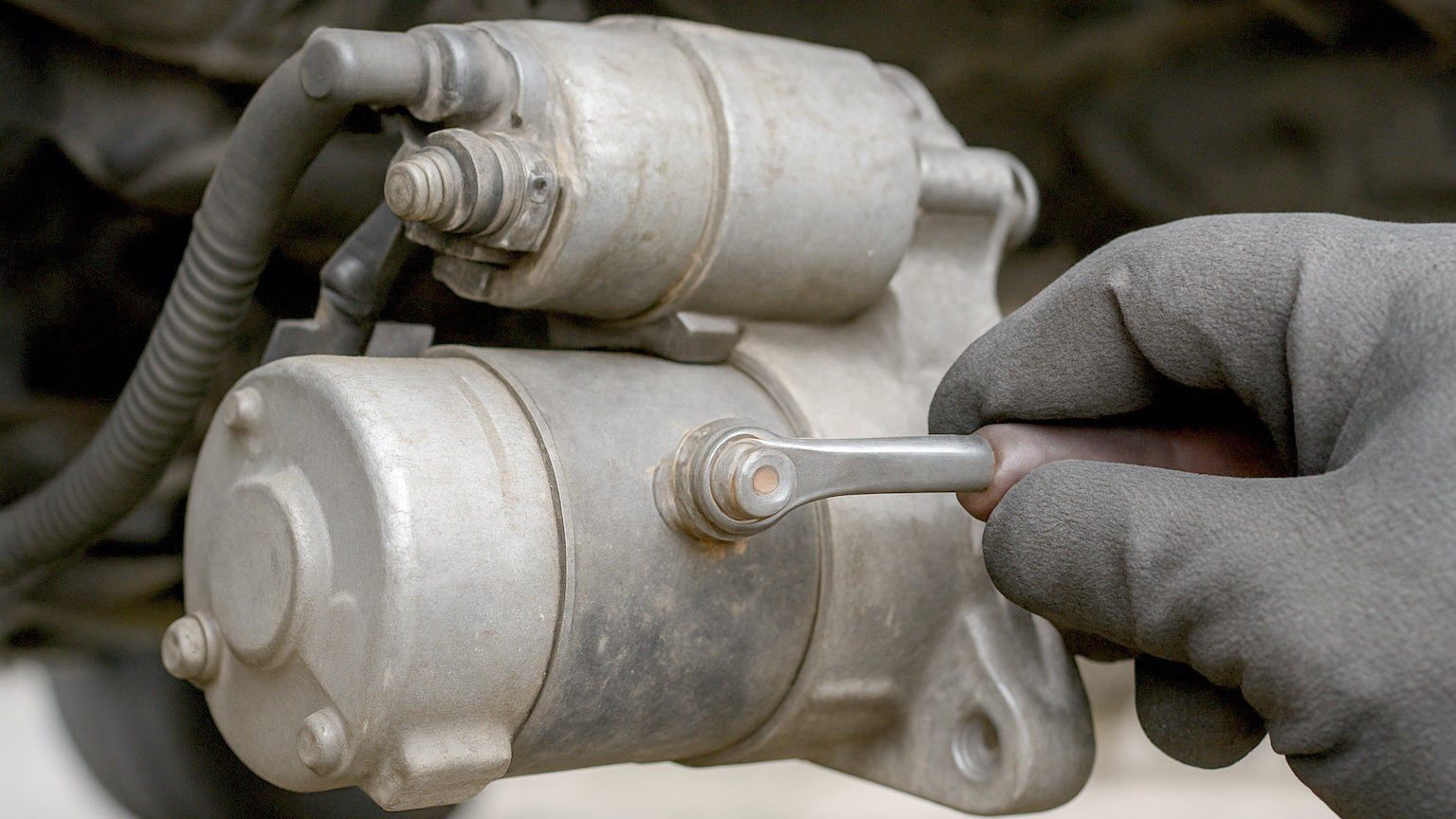
When you switch off a hot engine, the airflow stops but the heat does not, so under-bonnet temperatures actually rise for several minutes afterwards. Starter motors often sit close to the exhaust manifold and absorb a great deal of that heat. As the windings and solenoid warm, their electrical resistance rises, and a starter that is already worn may no longer draw enough current to turn the engine. The classic sign is a single click or a slow, laboured crank that recovers completely after half an hour of cooling.
If the car reliably starts again once it has stood for twenty or thirty minutes, that recovery time is itself a strong clue. Components do not repair themselves, so anything that works again after cooling is temperature dependent by definition, and that alone rules out a great many possibilities.
Which sensors fail when warm?
The crankshaft position sensor is the most notorious. It is a small electronic component in a hot location, and as it ages it can lose its signal above a certain temperature, leaving the engine management with no idea where the pistons are. The result is an engine that cranks strongly and never fires, usually with no warning light and often with no stored fault code, then starts perfectly once it is cool. It is a relatively inexpensive part and a very common cause of exactly this complaint.
Can hot fuel cause starting problems?
On older carburettor and low pressure injection systems, fuel sitting in hot lines can vaporise, and a pump designed to move liquid struggles with vapour. That produces long cranking and a car that eventually catches and runs roughly for a moment. Modern high pressure systems are far less prone to it, but heat still affects fuel pressure regulators and injectors, and a leaking injector can flood a hot engine so that it refuses to catch without the throttle held open.
How does the coolant temperature sensor fit in?
The engine management uses coolant temperature to decide how much fuel to deliver, and a sensor giving a wildly incorrect reading will cause the wrong mixture at exactly the wrong moment. A sensor that reports the engine as far colder than it is will deliver a rich cold start mixture to an already hot engine, which floods it. This fault often comes with poor fuel economy and a car that runs slightly rough, so look for those alongside the starting problem.
Could the battery still be involved?
Sometimes, though less often than with cold starting problems. Heat is harder on batteries than cold in terms of long term life, and a battery near the end of its service can lose enough capacity to struggle with the higher current a heat soaked starter demands. Since a load test is quick and free at most garages, ruling the battery out costs nothing and prevents chasing a sensor fault that does not exist.
How should you describe it to a mechanic?
Be specific about the sequence, because that is what shortens the diagnosis. Say whether the engine cranks normally or barely turns, how long the car needs to cool before it starts again, whether it happens after long drives or short ones, and whether any warning light appeared. An intermittent hot start fault that is described precisely can often be identified in one visit, while the same fault described as the car sometimes not starting can take three.


