
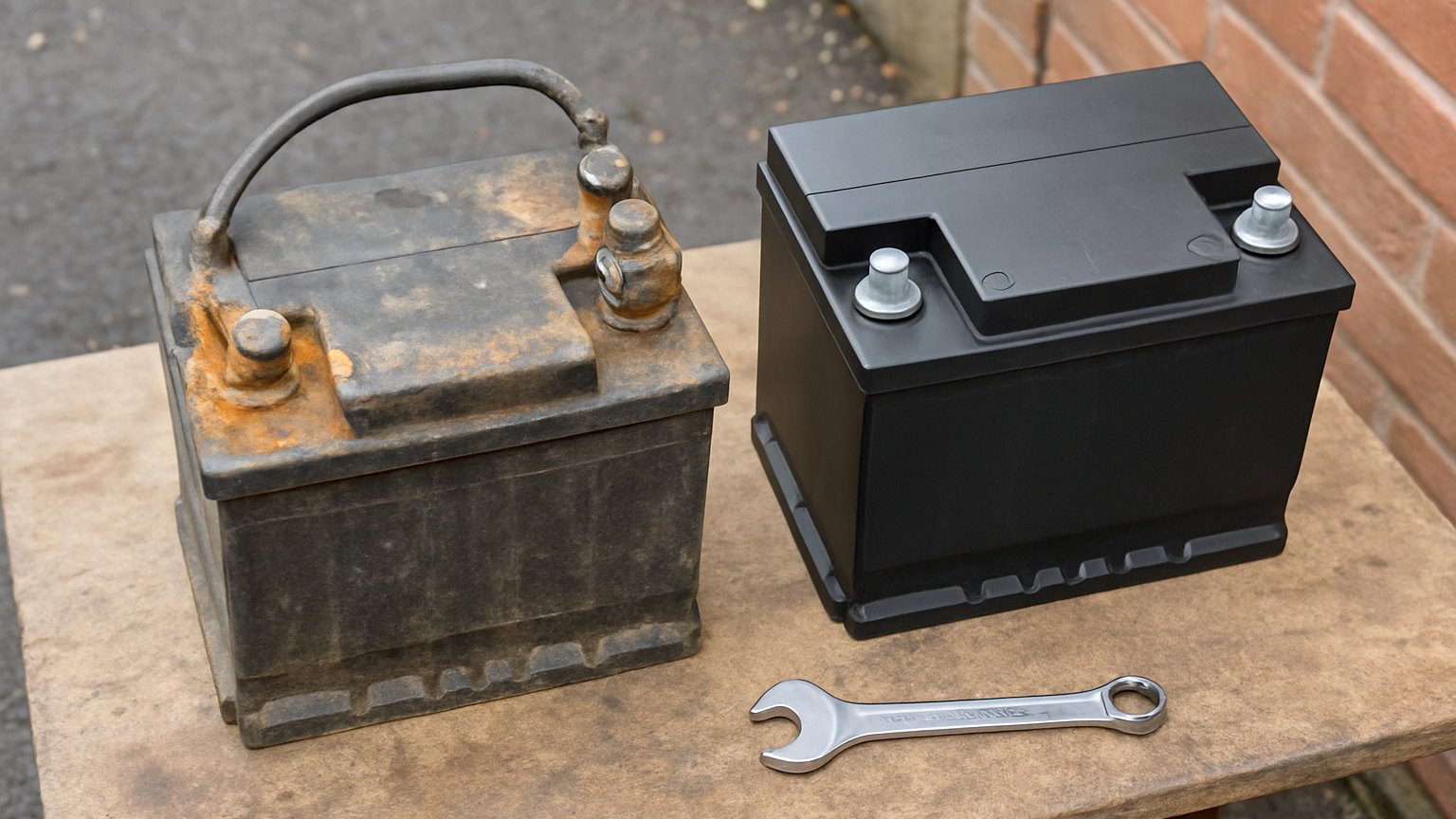
Almost nobody has a car that fails only in cold weather because the cold has broken something. What actually happens is that a battery, a starter or a set of glow plugs that was already tired gets pushed past the point where it can do its job, and the first frost of the year finds every marginal component on the vehicle. This is why breakdown services see their busiest mornings the day after temperatures drop sharply.
What does cold do to a battery?
A battery works through a chemical reaction, and that reaction slows as the temperature falls. At freezing point a healthy battery delivers noticeably less current than it would in summer, and one that has already lost capacity through age may drop below what the starter needs. At the same time the engine oil has thickened, so the starter is being asked to work considerably harder using a battery that has less to give. The two effects meet in the middle and the car will not turn over.
This is why a battery that has been perfectly adequate all summer can fail in a single cold week. It has not suddenly broken; it has simply been operating with no margin and the cold has removed what little was left. If your car cranks slowly on the first cold morning, treat that as a warning rather than an inconvenience.
Why do diesels struggle more than petrol cars?
Diesel engines ignite fuel by compression alone, and when the metal around the combustion chamber is very cold there is not enough retained heat to reach ignition temperature. Glow plugs solve this by preheating each chamber for a few seconds before cranking, which is why the coil symbol appears on the dashboard and why waiting for it to go out matters. When one or more glow plugs fail, the car starts fine in mild weather and refuses in frost, often producing thick white smoke and a rough, stumbling start.
Can fuel itself be the problem?
In genuinely low temperatures, diesel can begin to wax, meaning the paraffin content forms crystals that block the fuel filter. Fuel sold in winter months is treated to resist this, but a car filled in autumn and left standing through a cold snap can suffer. The symptom is an engine that cranks normally, may fire briefly, then dies as fuel delivery is choked off. Warmth is the only real cure, which means getting the car somewhere sheltered rather than persisting on the driveway.
Which habits make cold starting worse?
Short journeys are the biggest single factor. Starting an engine uses a substantial amount of charge, and a five minute drive to the shops does not replace it, so the battery gradually falls further behind through the winter. Add heated screens, blowers, wipers and headlights all running on those same short trips and the charging system never gets ahead. A weekly run of half an hour or so does more for winter reliability than almost anything else.
What should you do on the morning itself?
Switch off everything electrical before turning the key, including the heated rear screen, the blower and the lights, so the battery can put all it has into the starter. On a diesel, turn the ignition on and wait for the glow plug light to extinguish before cranking, and on a very cold morning it is worth cycling the ignition twice to give the plugs a longer heat. Crank in bursts of no more than ten seconds with a pause between them.
How do you stop it happening again?
Have the battery and charging system tested before winter rather than during it, since most garages do this free and it takes minutes. Clean and grease the terminals in autumn, and if the battery is over four years old and the car does mainly short trips, replacing it in advance is cheaper than a callout and a jump start on a January morning. Glow plugs on a diesel over a hundred thousand miles are worth checking at the same time.


