
A car left standing for a few weeks often refuses to start, and the reason is almost never dramatic. Modern vehicles never fully switch off, fuel does not stay fresh indefinitely, and moisture finds its way into places it would normally be driven out of. Understanding which of these has happened tells you whether the car needs ten minutes on jump leads or a proper look before it is asked to run.
Why does the battery go flat when nothing is switched on?
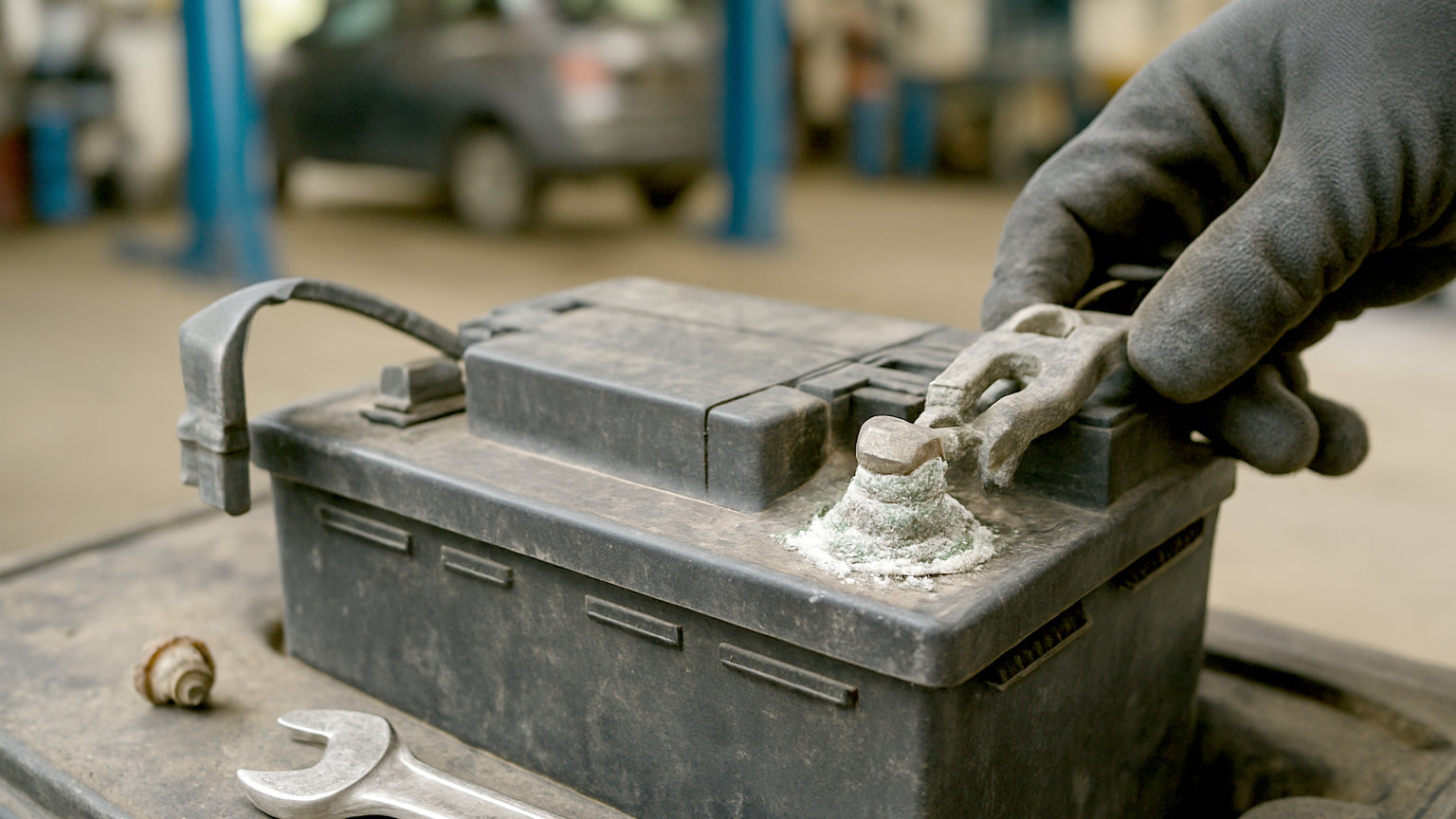
Every modern car draws a small amount of current continuously to keep the alarm, the immobiliser, the clock and dozens of control modules in a sleeping but ready state. That draw is tiny, but over three or four weeks it adds up, and it is on top of the natural self-discharge every lead acid battery experiences whether connected or not. A battery already halfway through its life may not have enough left after a month of standing to turn a cold engine.
If the car goes flat after only a few days, that is no longer normal standing loss. Something is drawing far more than it should, and common culprits include boot and glovebox lamps that never switch off, aftermarket alarms and trackers, dashcams wired to a permanent live, and door switches that fail to register a closed door. That is a fault worth finding rather than living with.
Does fuel actually go off?
Petrol does degrade, though rather more slowly than internet advice suggests. Over several months the lighter fractions evaporate and the fuel becomes harder to ignite, which shows up as long cranking, rough running and stalling rather than a total refusal. This is genuinely a problem for cars stored over a winter, and much less so for a three or four week gap. Diesel resists ageing better but can grow bacterial contamination in a part-full tank, particularly where condensation has added water.
What else happens while a car stands still?
Brake discs develop a film of surface rust within days, which is harmless and disappears in the first few hundred yards of driving, though it makes a startling grinding noise at first. Handbrake shoes and pads can bond lightly to the drum or disc after several weeks in damp weather, which is why leaving a car in gear rather than on the handbrake is sensible for long storage. Tyres develop flat spots that usually work out once warm, and rodents occasionally take an interest in wiring.
How should you bring a standing car back to life?
Start by looking rather than cranking. Check under the bonnet for anything obviously disturbed, look at the tyres, and check the oil and coolant, because a car that has been leaking slowly for a month may have lost a meaningful amount. Then turn the ignition on without cranking and let the fuel pump prime for a few seconds, repeating that two or three times so the system has proper pressure before the engine turns.
Is jump starting the right answer?
It will usually work, but it treats a symptom. A battery that has been deeply discharged for weeks has often suffered permanent capacity loss, and a jump start followed by a short drive leaves it barely charged and likely to fail again. A proper charge from a mains charger over several hours is far kinder and gives a much better indication of whether the battery has survived. If it goes flat again within days afterwards, it has not.
What prevents it next time?
A smart trickle charger left connected during long periods of inactivity solves the problem entirely and costs less than one battery. Failing that, disconnecting the negative terminal prevents standing drain, though it means resetting the clock and radio codes. If the car will be idle for months, leave the tank fairly full to limit condensation, and take it out for a proper half hour drive rather than a five minute run around the block whenever the opportunity comes up.


